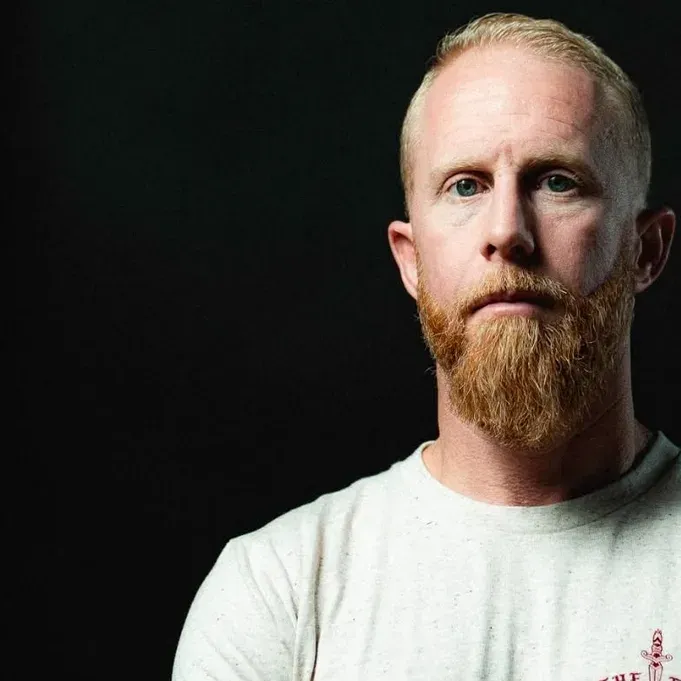
Brian McNally
Exited Founder and Executive Coach
He grew up doing archery in Pennsylvania, not far from the Poconos, got out of it entirely, and now has the hankering back, partly because his oldest is not the only kid discovering that a bow is quiet. These days he is on a lake near Tampa with a dock he finally built, catching bass while his son hauls twenty inch mud suckers out of the mud, and he is angling for a run offshore on the Gulf. He also started jujitsu just before turning forty and took his first MMA fight at forty three.
- Business Exit Planning
- Healthcare Revenue Cycle
- Founder Operating Systems
- Executive Coaching
- Company Turnarounds
About Brian McNally
Brian McNally is a Philadelphia raised entrepreneur who co-founded and exited a healthcare revenue cycle company, reaching number 281 on the Inc. 500 before COVID took half the business in six weeks. He now writes, coaches selectively, and teaches a founder operating system built around designing a sellable asset from day one. His book, Fuck Average, is aimed at a November release.
What Brian built
Working inside a large bureaucratic organization with the man who became his business partner, he spent his nights cataloguing what was broken and why nobody would fix it, then found an opening in healthcare revenue cycle where clinical work overlapped the reimbursement side and bet on it. What separates the story from most founder exits is that they set the terms before the doors opened: a twenty million dollar company in five to seven years, with the type of buyer already identified. That target governed the build. They kept the business to sales, delivery, and a little operations rather than standing up departments the buyer would only duplicate and discard, and they worked to replace his own indispensability as fast as the business allowed. They did ten million in 2019, landed at 281 on the Inc. 500, and were on run rate to double in March of 2020 with roughly three hundred people deployed in hospitals. He now teaches the same method as a founder operating system, alongside selective equity partnerships and digital products.
Brian in the field
Nature is not decoration for him. When he is not in a good mental place he goes and finds quiet woods, hikes, or simply sits alone out there, and his read is that men were meant to be in that setting and have slowly gotten away from it, which is why going back feels like relief rather than novelty. He did a lot of archery as a kid in Pennsylvania, near the Poconos, misses the quiet of it, and wants back in. He lives on a lake now with a dock he built, fishing bass off the back with his son, and he is close enough to the Gulf Coast to be talking about deep sea. He also connects the field directly to the scoreboard: we are wired to feel something when we bring home a meal, and business success taps the same circuit, because underneath it we are built to be providers and protectors. The clearest version of the argument is his father, offered a drive around elk hunt because he can no longer walk one.
Why this conversation matters
Nearly every owner says they want to sell someday, and almost none of them build anything a buyer would want. This conversation puts the gap in plain terms, from a man who set his number before the doors opened and then let it decide what he refused to build, next to a host who has looked at acquisitions where the owner is still seventy percent of the operation. The tension is what happens after. He could still be running a hundred and fifty million dollar company and instead took freedom against an enough number he had already defined, which is the harder decision and the one nobody prepares for. Between the two sits 2020, three months of pizza and anger, and a turnaround built on 4:00 AM alarms and three commitments, sustainable only because he knew it was a sprint with a finish line. The whole thing lands on the show's own question, which is what you are actually hunting for, and his father's elk hunt is the answer nobody wants to hear.
“I just wanna be able to tell the story at a bar. That's it.”
Brian McNally on The Hunt for Success
Sam McGough's full conversation with Brian, available on YouTube, Spotify, and Apple Podcasts.
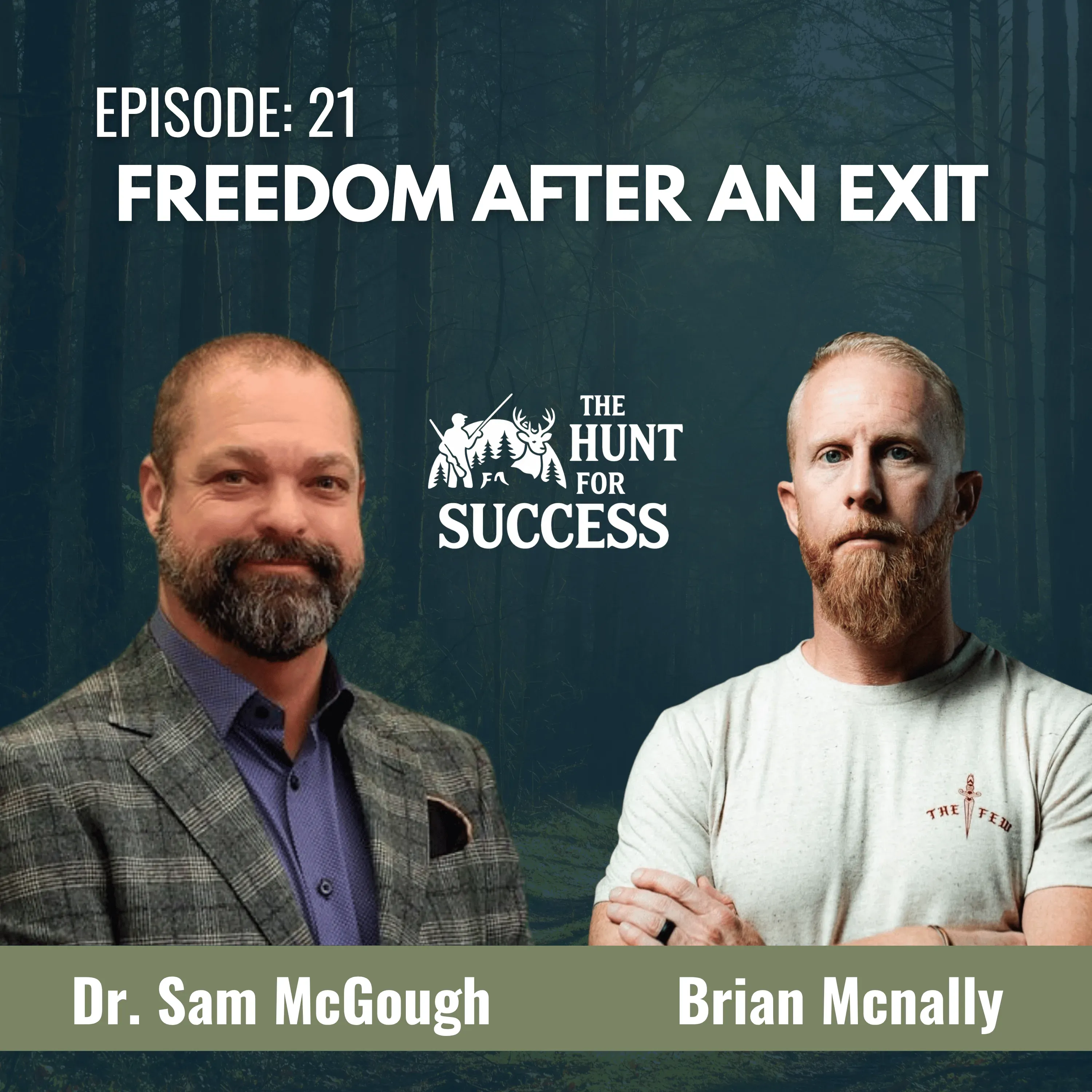
Key takeaways from Brian McNally
The ideas Brian left on the table in episode 21.
-
A fifty dollar shoe limit and a bulk can operation.
His mother capped what she would spend on sneakers and told him that if he wanted the Air Jordans everyone at the courts had, she would put in her share and he could earn the rest doing whatever he had to do. He was around eleven or twelve. He shoveled snow, worked two jobs in high school, and worked out with his brother that the apartment complex bins were fullest the day before recycling pickup, so they emptied them and cashed the cans in until somebody told them to stop.
-
You are creating an asset, not a job.
Most frustrated employees leave and build themselves a worse job with less freedom, which he says he sees constantly in founder led companies. He and his partner set the target before they opened: a twenty million dollar company in five to seven years, sold to a buyer they had already identified. That decided the shape of the thing. They stayed sales, delivery, and a little operations, and kept out the departments a buyer would only duplicate and discard.
-
The owner who is still seventy percent of the business.
Sam brought a live example, an HVAC company he looked at within the last month whose owner had been running it for forty odd years and was still doing roughly seventy percent of the work himself, paired with a valuation that had nothing to do with reality. Brian's point is that founder dependency has to be removed on purpose and early, because the moment you know you are selling, the fastest thing you can do is bring in people to replace yourself. Most owners only decide to sell when they are frustrated or old, which is the worst possible moment to start.
-
Tax strategy is the thing he would do over.
He gave himself what he thought was enough time, about nine months in that final year, and built relationships with advisors, but he only reached the first layer. They did charitable giving and some leveraged strategy and it helped. He is convinced there was a deeper set of options they could have entered while still operating the business, and that knowing them earlier would have saved millions. He also draws a line at complexity, because past a certain point the structure costs more in friction than it returns.