
SUCCESS IS EARNED.
FREEDOM IS DESIGNED.
Conversations with founders, operators, and builders who designed a life worth living.
Hunt for Success documents how real builders think, decide, and live — from the boardroom to the backcountry. No recycled advice. No performance. Just the honest version — on business, discipline, and the designed life.
"Success should fund a life you actually want — not a self-created prison."
This show exists for the builder who wants both. The business and the life. The discipline and the freedom. The boardroom and the backcountry.
Brian McNally
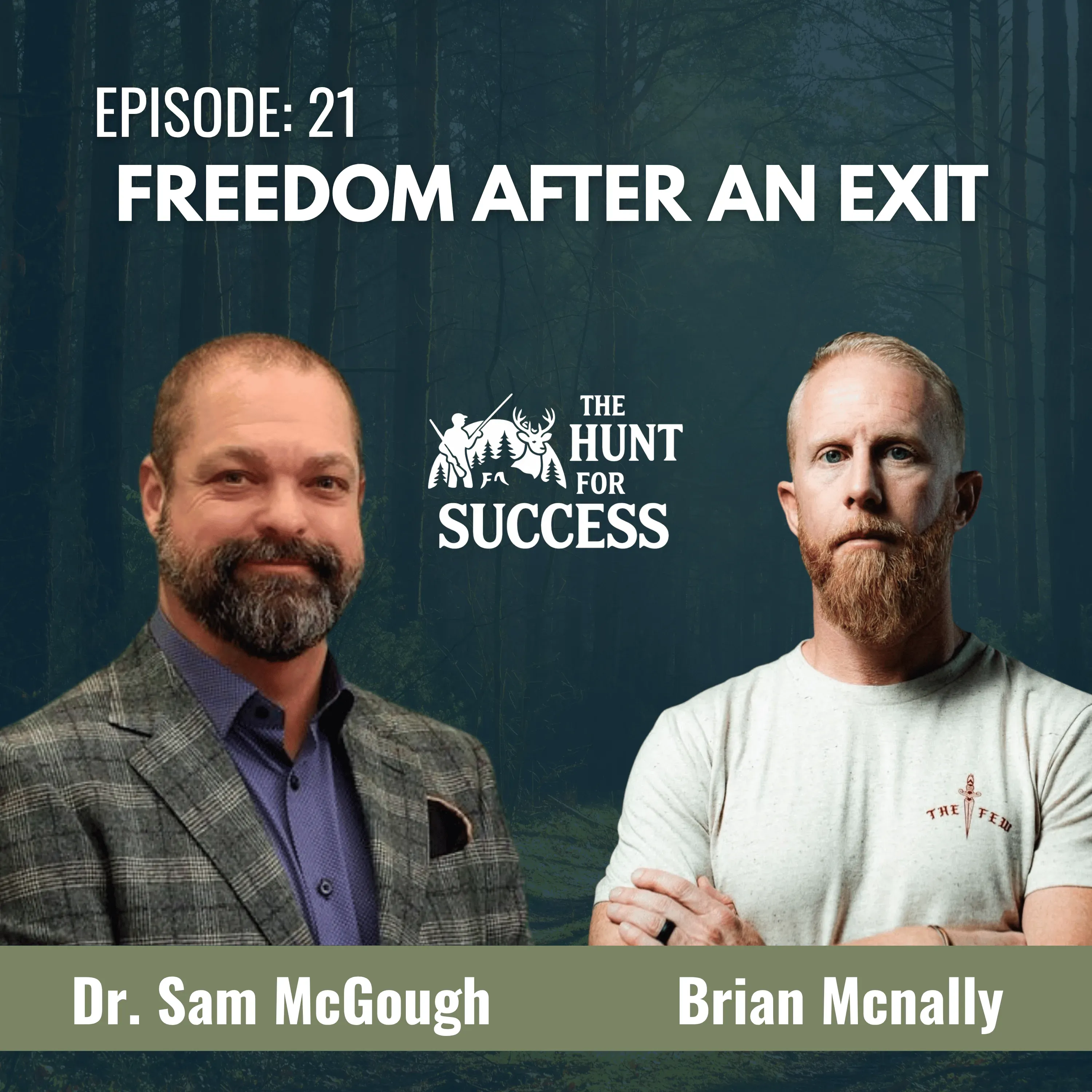
Freedom After an Exit
Sam McGough sits down with Brian McNally, who grew up in a Philadelphia apartment complex with a longshoreman father and a fifty dollar shoe limit, which meant that if he wanted the Air Jordans the other kids had at the basketball courts, he covered the difference himself. He and his brother figured out that the bins in the complex were fullest the day before recycling pickup, so they emptied them and cashed the cans in, and he shoveled snow and worked two jobs in high school. Years later, stuck inside a large bureaucratic organization with the man who became his business partner, he found an opening in healthcare revenue cycle where the clinical work overlapped the reimbursement side, and before they opened the doors they set a number: a twenty million dollar company in five to seven years, sold to a buyer they had already identified. He talks about what that number changed, why they refused to build departments the buyer would only duplicate and discard, and the one thing he would do over, which is tax planning started years out rather than nine months out. The middle of the conversation is March of 2020, three hundred people deployed in hospitals, half the business gone in six weeks, and three months of pizza and anger before a fork he describes as accepting failure or fighting. The back half is capacity: a soccer sideline, a mountain in Switzerland, a first cage fight at forty three, and an outfitter saying his father could ride along on the elk hunt but could not walk it.
DR. SAM McGOUGH
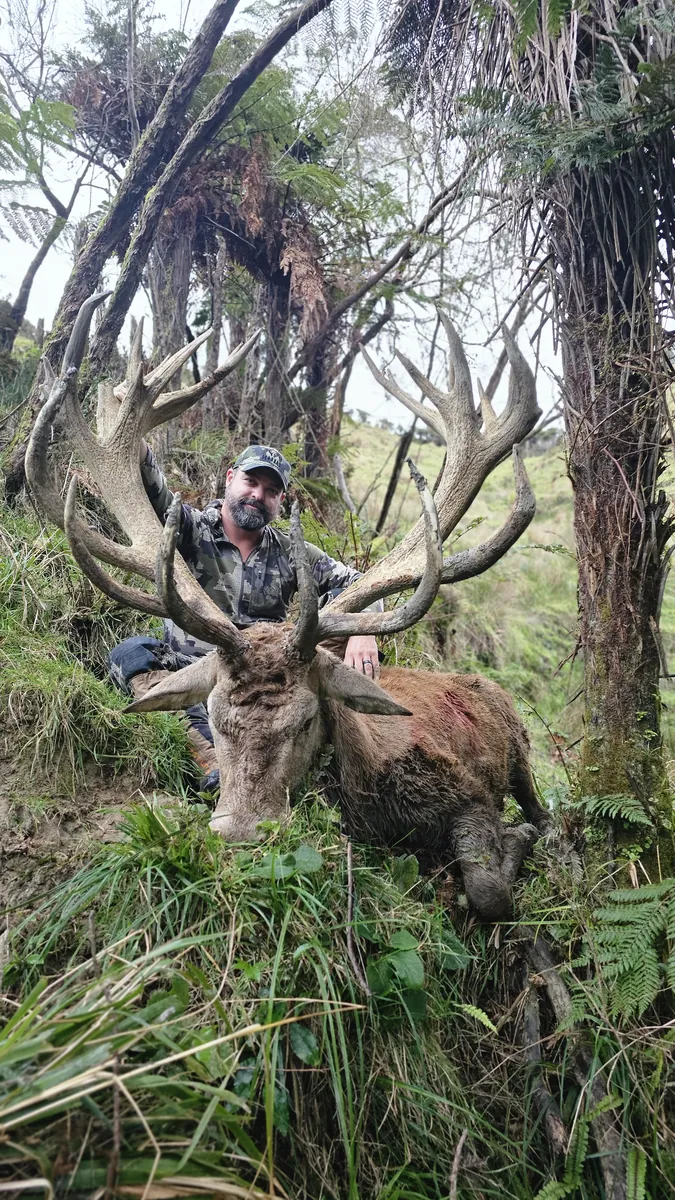
A healthcare CEO and multi-company operator, Sam built his career by identifying inefficiencies and engineering systems that perform under pressure.
This show wasn't created to interview influencers. It documents peer-to-peer conversations with builders who've done what most only talk about.
For Sam, the backcountry isn't a weekend escape—it's where discipline, patience, and clarity come from. The two aren't separate.
Every conversation on this wall was built, not given.
Choose your next conversation.
Freedom After an Exit
Brian McNally
Sam McGough sits down with Brian McNally, who grew up in a Philadelphia apartment complex with a longshoreman father and a fifty dollar shoe limit, which meant that if he wanted the Air Jordans the other kids had at the basketball courts, he covered the difference himself. He and his brother figured out that the bins in the complex were fullest the day before recycling pickup, so they emptied them and cashed the cans in, and he shoveled snow and worked two jobs in high school. Years later, stuck inside a large bureaucratic organization with the man who became his business partner, he found an opening in healthcare revenue cycle where the clinical work overlapped the reimbursement side, and before they opened the doors they set a number: a twenty million dollar company in five to seven years, sold to a buyer they had already identified. He talks about what that number changed, why they refused to build departments the buyer would only duplicate and discard, and the one thing he would do over, which is tax planning started years out rather than nine months out. The middle of the conversation is March of 2020, three hundred people deployed in hospitals, half the business gone in six weeks, and three months of pizza and anger before a fork he describes as accepting failure or fighting. The back half is capacity: a soccer sideline, a mountain in Switzerland, a first cage fight at forty three, and an outfitter saying his father could ride along on the elk hunt but could not walk it.
Trades Will Create the Next Millionaires
Ben Jordan
Sam McGough sits down with Ben Jordan, a plumbing and HVAC operator turned coach who is certain that the next five to ten years will produce more millionaires out of the trades than out of any other industry in the world. Jordan's own turn came in October of 2017, in front of a mirror, at four hundred pounds, with a sentence he still repeats: enough is enough. By July of the following year he had lost a hundred and twenty pounds while running a company he admits he did not yet know how to run. He hates shooting content, says it feels the way running ten miles felt at four hundred pounds, and does it anyway because of the plumbing owner who messaged him on the drive home from a studio session to say he had dropped sixty pounds watching the videos, forty five minutes after Jordan had been arguing about why he was too busy to film. The middle of the conversation is a standard: are we showing up to fix something, or are we showing up to serve. In practice that means naming the root cause, catching the failing air conditioner in April rather than in August at a hundred and twenty degrees, and one family who had quit their jobs believing they were terminally ill until his crew found the carbon monoxide. The back half is elk. Colorado wall tents, horses, four or five miles deep, eleven animals down in a single day, a promise kept to the great aunt who raised him, and a line from his father that lands on every closed deal. Now the work begins, son.
Hunting and Fitness After 40
Ken Wall
Sam McGough talks with Ken Wall, a thirty-year fitness coach from Pennsylvania who got into the profession by getting hurt, over and over, every time he got slightly better than a marginally decent athlete. That was the late eighties, when nobody knew anything about injury prevention and the whole program was bigger, faster, stronger. He went to school for exercise and sports science, took a training job out of school, and, as he puts it, blinked and thirty years went by. He is about to turn fifty-three, which is the point, because the clients he serves are over forty and carrying a business or a job, kids in three directions, and a set of aches nobody warned them about. His argument is that you do not train easier as you get older, you train in a way that minimizes risk, since what you did at twenty-two was never good for you, you simply had the capacity to recover from it. He wrote Hunting Beyond Limits for the hunter who is never going twelve miles in to pack out an elk, the far larger group who want to get through an evening sit without their back killing them. Along the way there is a heated vest he swore he would never own and now carries a spare battery for, a mentor's rule about one mobility day a week for every decade you have been alive, a Finding Nemo costume, and a decision to leave a business he had spent ten years building.
Seven Stages of Business Success
Carl Gould
Sam McGough sits down with Carl Gould of 7 Stage Advisors, who was studying accounting and finance until he broke his leg badly in his second year of college, could not afford to keep paying his own way, and at eighteen and a half went back to the landscaping work he had done all through high school and opened a design build firm instead. He grew that and sold it, moved into custom home building and real estate development, grew that and sold it too, and spent the nineties collecting every certification the coaching world offered back when there was barely a coaching industry to be certified in. The framework came out of an accident. He was running paper DISC assessments on a two hundred thousand dollar a year business owner and a Fortune 500 executive at the same time, and when each of them described their company, the business was strong exactly where the owner was strong and soft exactly where the owner had a blind spot. Thirty-six years of testing later, he says two questions will locate that blind spot, and that closing it is worth ten to thirty percent inside that part of the business. The rest is pricing (nobody knows it is your first day except you), audiences worth saying no to, why the middle of the market goes invisible in a winter economy, and a dump truck rated for ten thousand pounds that he kept loading with fifteen. Then fishing, which turns out to be the same conversation about bait, depth, speed, and the fish you actually want.
The Hustle Mindset: Scaling Enterprise Leadership
Matt Fourie
Sam McGough sits down with Matt Fourie, who runs the General Motors business at Siemens Digital Industries Software and got there with no college degree and no network. He grew up in what he calls a hustle country, where if you are not working the hardest you do not come second, you come last. His first venture was two mango trees in the family yard, sold by the bucket to women walking to the train at half past five, priced at a dollar if you knocked on his window and seventy-five cents if you knocked on his brother's, because he hated mornings. In his mid-twenties he was running a large electroplating company, punching above his weight, when the owner's decisions took it down and left him sending five hundred resumes into a South African job market that returned nothing. He talks about the drive home in a little red car, what his wife said, and the lesson he took out of it, which is not about resilience so much as about not pursuing something you have not prepared for. The back half is hunting: a professional hunter father, an impala he could not see over the grass at eight years old, a return to Limpopo twenty-odd years later, and a read on rejection that works the same in a boardroom as it does in the bushveld. The animal was not offended. It saw you, heard you, or winded you, and it has not gone ten miles.
Building Careers and Community
Tucker Green
Sam McGough sits down with Tucker Green, who ran for a school board seat in Pickens County, Georgia at 21, won it, and became the youngest school board member in the state. That race got him noticed by a former state representative turned lobbyist, who hired him out of college and then promptly retired, leaving Tucker with a slice of a book of business and a firm to build. He now runs Tucker Green & Associates and, through it, the Conditioned Air Association of Georgia: 650-plus HVAC, plumbing and electrical contractors, founded in 1980, operated day to day by his company. The centerpiece here is a permit fee reform bill that took years, cleared the House, got amended in the Senate, and then died when the House adjourned without agreeing, for a reason that had nothing to do with the policy or the work. He came back and passed it, then had to send attorneys after two cities that kept charging anyway until they wrote reimbursement checks back to the contractors. In between there is quail hunting he found late and now likes better than deer, a blood-stained orange vest he wears for everything, and a straight answer about what he tells the college kids he takes on: honor your name, do the work nobody gives credit for, and the rest of it sorts itself out.
Think you belong in this conversation?
This show is built for people who have actually built something — in business and in life. We're selective because our listeners are.
"The best conversations happen between people who've already done the work."
SUCCESS IS EARNED.
FREEDOM IS DESIGNED.
The best ideas from people who've built something real, distilled into one useful move. Three minutes, every Tuesday.
Prefer to listen