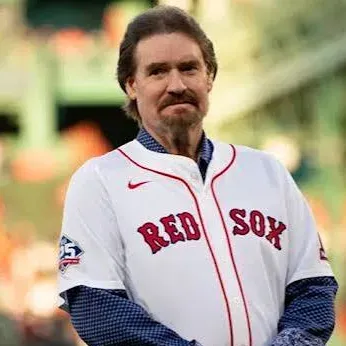
Wade Boggs
Hall of Fame Third Baseman
He started as his father's bird dog on dove and quail hunts and now has about 270 animals in his house, which he describes as building an ark. He holds the North American sheep grand slam, all nine billfish, and a 59-inch Marco Polo from Tajikistan, and the piece still missing is a marlin over a thousand pounds. He took a sheep on every sheep hunt he went on and puts that down to being blessed.
- Hitting Under Pressure
- Game-Day Routines
- Sheep Hunting
- Billfish Angling
- Prostate Cancer Awareness
About Wade Boggs
Wade Boggs is a Hall of Fame third baseman who collected more than 3,000 hits on the strength of a famously regimented game day, chicken included. Since retiring at 41 he has hosted outdoor television, completed the North American sheep grand slam and the royal billfish slam, and, after beating prostate cancer in 2025, become a plain-spoken advocate for annual PSA screening.
What Wade built
Wade Boggs is a Hall of Fame third baseman and outdoor television host, and the career that put him in Cooperstown was built slowly. He spent five and a half years in the minor leagues, led the league in hitting at Pawtucket in 1981 without a call-up, went straight to winter ball in Puerto Rico, and made the big league club out of spring training in 1982. The chicken arrived around 1983, the year he won a batting title, and the rituals multiplied from there to seventy-five or eighty a day. He hit leadoff for most of his career, never a rah-rah presence, and had a 240-hit season because he refused to treat two hundred as a goal. He reached two thousand hits in ten years, played on to forty-one for the three thousandth, and gave the one speech he remembers on the plane to Atlanta in 1996 before a World Series his team went on to win. Since retiring he has hosted Hitting the Outdoors with Wade Boggs on Pursuit Channel and co-hosted other outdoor shows.
Wade in the field
His earliest memory is fishing with his grandfather at three. As a boy he was his dad's bird dog on dove and quail hunts, running down the birds, and he was fifteen or sixteen before he got to shoot. His first real big game hunt came in 1984 with Buckmasters just outside Selma, Alabama. During his playing years the calendar fought him, since sheep season falls in late August and September, so he fished wherever the schedule allowed: farm pond bass in Kansas City, salmon on Lake Michigan, stripers and bluefish on the Cape after a Sunday day game. Retirement opened everything up. He went to Africa for the Big Five and Dangerous Seven, finished the North American sheep grand slam, tracked an elephant herd twenty-seven miles one day and about thirty-three the next, and sat ground blinds in Saskatchewan at thirty below. He still wants a 170-plus whitetail and a thousand-pound marlin, and he is content now to pass immature animals and go home with an unfilled tag.
Why this conversation matters
The interesting tension here is that a man who scripted every minute of his game day also refused to set personal goals, and the two turn out to be the same idea. The rituals took the small decisions and the small worries off the table, and the absence of a fixed target meant there was never a number at which he could relax. That is a useful frame for anyone who performs under pressure, and Boggs adds a third tool in the playoff reset, where every average goes back to zero and one hit has you hitting a thousand. The conversation also covers the cost of staying in the field as you age, with outfitters asking $110,000 for a Stone sheep, and it ends on the most practical part of all. His PSA was low enough that many doctors would have waited. It was moving, someone asked a question, and he is here to tell other men to get checked every year.
“You never know when that one sheep hunt might call.”
Wade Boggs on The Hunt for Success
Sam McGough's full conversation with Wade, available on YouTube, Spotify, and Apple Podcasts.
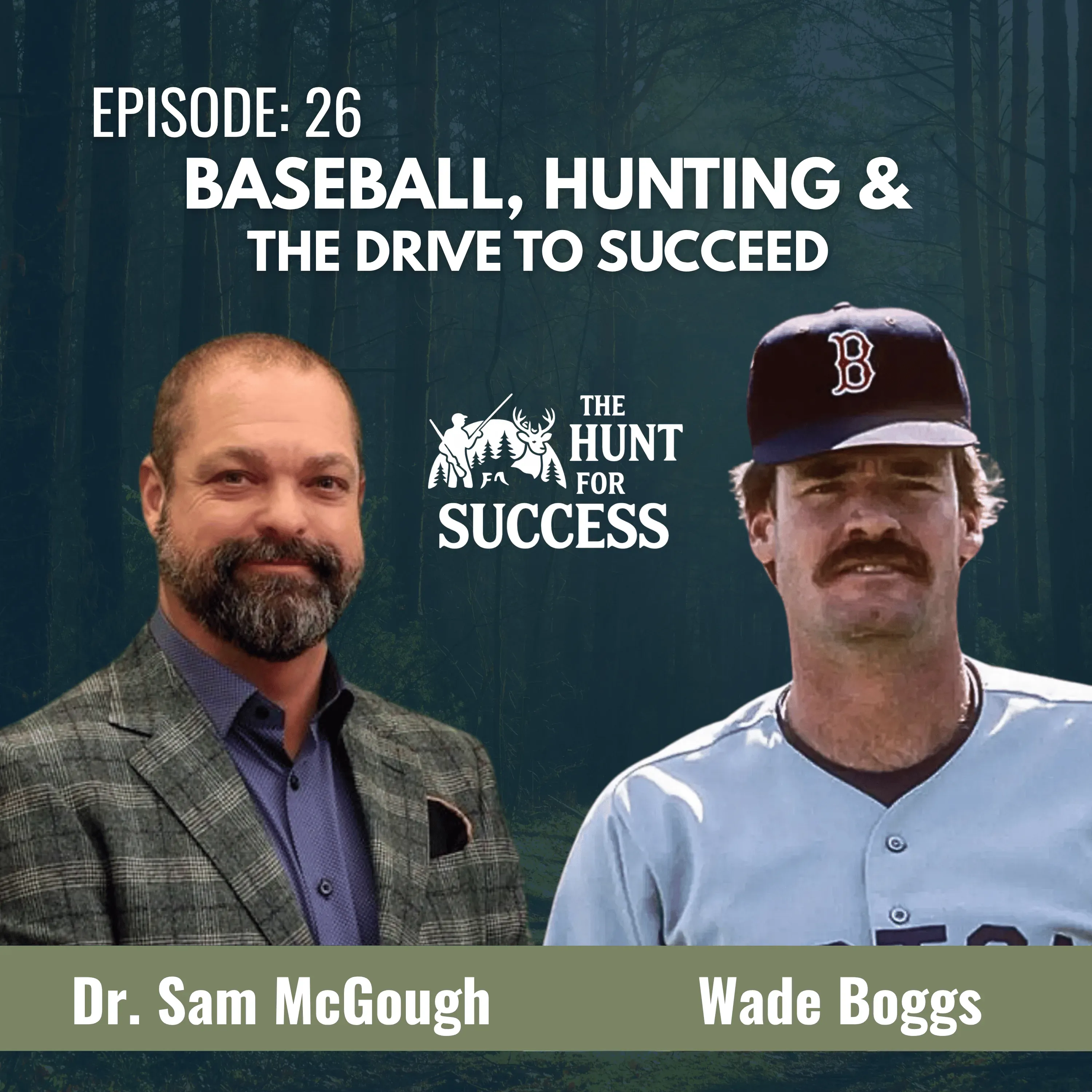
Key takeaways from Wade Boggs
The ideas Wade left on the table in episode 26.
-
Nothing really snuck up on me.
Boggs ran through seventy-five or eighty rituals over the course of a game day, eating chicken before every game among them, and assigned a set time to all of it. The habit came from a military household where every meal and every wake-up happened on the clock. The payoff was mental: with the day scripted, he was not worrying about who he was facing, whether he would make an error, or whether he would lose the game. He concedes that missing five or six of the rituals probably would not have hurt him, and that nobody will ever know.
-
The ball's in their court.
Five and a half years in the minors, a batting title at Pawtucket in 1981, and no call-up. Ten days later he was in Puerto Rico playing winter ball. His read was that he was doing everything he could and the decision belonged to someone else, so he kept playing the game he had played all his life and kept performing. He was added to the forty-man roster and made the big league club out of spring training in 1982.
-
Mentally first, then physically.
A sheep hunt runs twelve to fourteen days with a forty or fifty pound pack, a tent, and grizzlies all around, and it wears at the mind before it starts on the body. Training in Florida for a mountain hunt is hard, and in Tajikistan he had twenty-four hours to acclimate before hunting at sixteen thousand feet. You can be five days in and not have seen anything. He took a sheep on every sheep hunt he went on and calls himself very blessed, because a lot of guys cannot say that.
-
In October, everyone is hitting zero.
By August and September a player is physically beat, and with thirty-five spring training games counted, a run to Game 7 of the World Series means close to 230 games. What carries you is the reset. After 162 games every batting average goes back to zero, even after your worst year, and one hit in the first playoff game has you hitting a thousand. He says that changes your attitude in a hurry.
Wade's ideas in The Pursuit
Where the weekly newsletter picked up this conversation.