Episode 03 with Erik Nordstrom. Automatically generated and lightly edited for readability.
SAM McGOUGH · 00:00
Welcome everybody. Back to the Hunt for Success podcast. Each week I interview business owners and entrepreneurs who also like to hunt and fish. This week we have Erik Nordstrom of Iron Ridge Capital — a Texas-based real estate company. We’ve gotten to know each other quite a bit and we both have a love for hunting. Erik, welcome to the show.
ERIK NORDSTROM · 01:10
My partner Erik Trotro and I have known each other since we were 14 years old. After high school I went to Florida for college and started opening gyms — small express-gym models, eight to fifteen thousand square feet, low entry point. He went to the University of Washington, walked into a commercial broker office at 20, and said “you have me for a year for free, I want to learn as much as I can.” He became a commercial broker in multifamily and syndicated his first deal in December 2007 — three months before Lehman Brothers crashed.
ERIK NORDSTROM · 04:00
January 2011 we did a six-unit deal together in downtown Seattle, right across from Seattle University. He, his dad, and I swung the hammer on the entire renovation inside and out. Held it just over two years, did 26% per year. I got hooked. Sold my shares of the gym and went full-time on real estate.
ERIK NORDSTROM · 05:30
With no track record, raising $250,000 of that first $300,000 was a struggle — two young guys with nothing to show. Now we have a deal under contract, raising just under five million, and the last four or five raises have filled in about 60 seconds. The track record put us in a position to raise.
ERIK NORDSTROM · 06:30
We’re very disciplined on how we underwrite. We took a hiatus for three years from 2022 to 2025 because the market wasn’t right — too many people were paying too much, we anticipated rates would rise, which they did. It was hard not to buy anything. But we don’t buy deals to place money. We buy deals to make money. Strom and I put our own money in every single deal, and most of our investors are family and friends. It’d make Thanksgiving very awkward if we ever did a bad deal.
ERIK NORDSTROM · 07:30
We’ve always been owner-operators, vertically integrated since the beginning. We tried hiring property management companies in the early years and they could never operate the way we wanted. As owners you look at things differently — a management company makes its money on top line, so expenses run wild. Owners look at NOI. That’s the money you actually have to pay back investors.
ERIK NORDSTROM · 08:31
In 2018 we decided Washington wasn’t our future — too many regulation changes for landlords. Spent 2019 researching every major metro in the country, narrowed to Texas and Florida. Bought our first Texas deal in 2020. As we sold our Washington portfolio, the buyers were so impressed with how we managed that they kept asking us to stay on. We started third-party management in 2020, and that portfolio — about a thousand units now — kept us afloat through the buying hiatus.
ERIK NORDSTROM · 11:10
The leadership team is the most valuable asset in a growing company. The hard part is you can throw money at it upfront and build it quickly, but you eat that cost for a long time. Or you can do it organically, which is a grind. We did it organically. In the very beginning it was just Erik and I — we sat in every seat: accounting, project management, maintenance coordination, leasing, regional, marketing. As we grew, the seat taking up most of our time was the seat we’d hire next. About 40 employees now.
ERIK NORDSTROM · 13:42
Last year, 74% of multifamily was underwater. Rates had been at all-time lows, lenders were lending at 85% loan-to-value, and the number-one product was a bridge loan — basically a construction loan that lasts about three years. All those bridge loans started coming due in late 2023 and early 2024 just as rates rose. So owners’ three-percent loan went to eight, their 85% LTV went to 55, and most didn’t have the millions to come out of pocket. Banks didn’t want to take the buildings back, so they pretended and extended.
ERIK NORDSTROM · 17:36
We knew the banks would eventually have to offload, and they’d look for operators with track records. So in 2024 we built lender relationships. The deal we have under contract right now — bought 2021 for just under $15 million — the lender foreclosed and we’re under contract for $10.4 million. Buildings in that submarket near White Rock Lake in Dallas trade around $110,000 to $120,000 a door. We’re buying it at $71,000 a door.
ERIK NORDSTROM · 21:52
We’ve got an 18 to 24 month window where the opportunities will continue to present themselves. After that, the players who got weeded out will start coming back into the market and competition rises again. We’ve spent the last three years building the infrastructure to take advantage of exactly this moment.
SAM McGOUGH · 23:30
Let’s shift gears and talk about hunting and fishing. How do you find the time, or what do you do to make sure you have time to enjoy your passions?
ERIK NORDSTROM · 23:57
It’s not if I have time, it’s making time. The stress of being a business owner over the last four years — hunting was my zen. As soon as I opened the gate and drove my truck onto the property, the weight came off my shoulders every single time. It wasn’t just something I wanted, it was something I needed. My camp is two hours door to door from my house, and my son was at the perfect age to get involved when we moved to Texas in 2021.
ERIK NORDSTROM · 25:33
I started hunting at seven or eight with a pellet gun outside Gainesville, Florida — squirrels and raccoons in the woods across from my grandparents’ lake. First serious hunting in high school. Hog hunting in Florida, then deer and elk after I moved to Washington. My son has been fishing since he was old enough to hold a pole.
ERIK NORDSTROM · 27:19
At our hunting camp now, we have six tanks on the property. Even off-season, I’d wake up at 6:30 and my son would already be at the pond, two hundred yards from the camp. He’d be out there from six in the morning until I called him in at five at night to come eat.
ERIK NORDSTROM · 28:34
When my son got his first buck, tears ran down my face. Such an amazing experience. The excitement on his face. I’m not sure there’s a better moment hunting than your kid getting their first deer.
ERIK NORDSTROM · 31:00
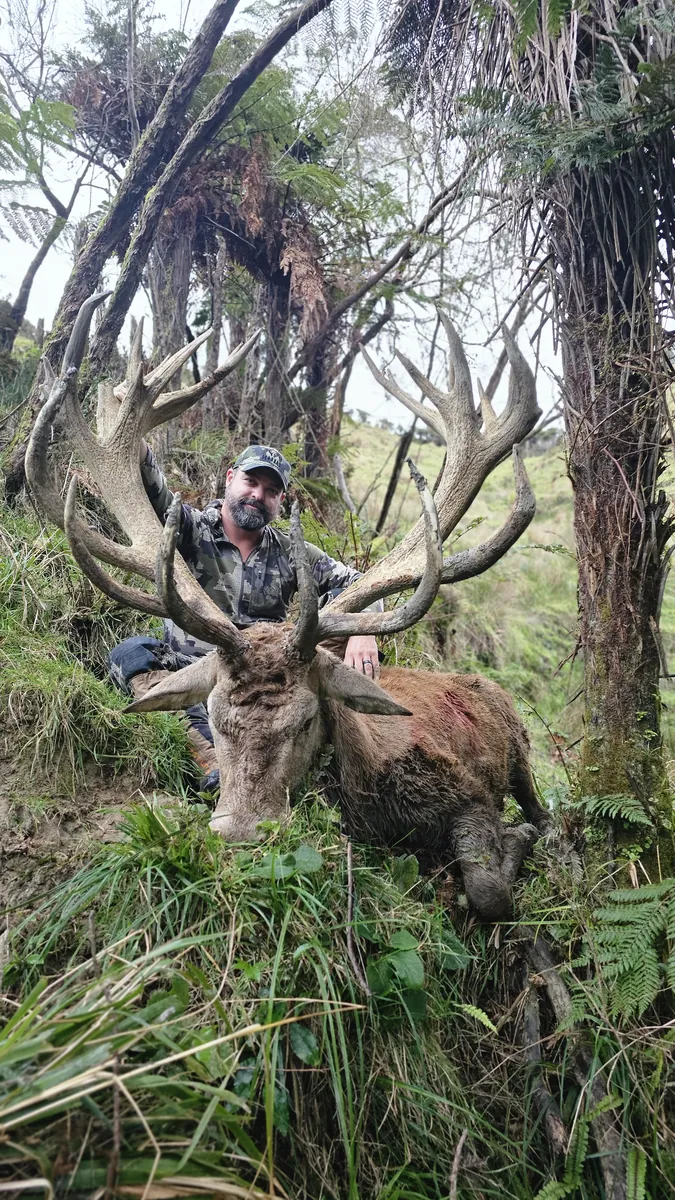
This last season I got a 13-point — the largest buck I ever shot, 44 years in. I’ve got it scheduled to be picked up shoulder-mounted in a few weeks. The joy doesn’t come from the kill — it comes from being out there, the peace and quiet, the possibility. All those other times I was out there not getting anything, just having that time with my son. I wouldn’t change any of it.
ERIK NORDSTROM · 32:40
People are going to screw up. We have a screw-up bell. On our calls, we encourage employees to ring the bell when they make a mistake. It’s not just a lesson for them — if our team doesn’t know about it, they’re not going to learn from it either. When we first rolled it out people were hesitant, but now they’re like, “hey guess what, I screwed up.” All right, let’s hear about it.
ERIK NORDSTROM · 35:23
AI has been the talk over the last year. My biggest fear was, what are my kids going to do? My daughter is heading off to college on a lacrosse scholarship, my son’s about to be a freshman in high school. So my wife and I have been planning. The plan: my son loves hunting and fishing — AI is not going to replace a hunting and fishing guide. We’re downsizing the current house and looking at land in Tennessee.
ERIK NORDSTROM · 38:54
Northeastern Tennessee, around the Johnson City area. I screened states for low income tax and low property tax — Wyoming and Nevada were on the list, but the Smoky Mountain land is dirt cheap. Eight hundred acres for a million bucks, structure already on it. The plan is a high-fence hunting ranch with my son as guide, and my wife is going to run a wedding venue on the same property.
ERIK NORDSTROM · 41:46
My wife came up with the wedding venue angle. The grooms party can do a hunt for their bachelor party. Tennessee allows exotics — red stags, axis, the kinds of animals East Coast guys can’t easily go after without flying to Texas or overseas. Both businesses are AI-proof, and the property is a place we actually want to spend time.
ERIK NORDSTROM · 44:08
Discipline has been our key to success. We have a 24% annual return to our investors over the last 18 years, through two downturns. Our worst deal — a property in Bremerton, Washington that burned 60% to the ground in February 2020, sat vacant through COVID, then we leased it back up — still returned 7% per year because we bought right and carried 24 months of loss insurance. Investors who’d written that check off were surprised when they got it. That’s discipline.
SAM McGOUGH · 45:30
A guy told me a long time ago — you make more money off your no’s than your yes’s. The discipline to say no to all the bad deals. Twenty-four percent in your industry through two downturns is incredible. Erik, appreciate you coming on. Definitely can’t wait to get out to your ranch.
ERIK NORDSTROM · 46:00
Our next podcast will be out at the ranch in May. Looking forward to it. Thanks, Sam.