Episode 10 with Eric Killen. Automatically generated and lightly edited for readability.
SAM McGOUGH · 00:00
You created — you designed — the life that you wanted. You could’ve just stayed in sales. You’re doing great.
ERIC KILLEN · 00:10
Over the years it’s gotten to be where now we want to travel abroad, do something different every year. We’re going to Africa this year, Australia next year — but there’s other places we’re going to visit.
SAM McGOUGH · 01:00
Thank you for tuning in to The Hunt for Success podcast. I’m your host, Dr. Sam McGough. Each week we talk to successful entrepreneurs and business people who also love hunting and fishing. Today I’ve got with me one of my best friends, who helps me with all the adventures I get to go on — Mr. Eric Killen. Eric, welcome. Introduce yourself.
ERIC KILLEN · 01:17
My name is Eric Killen. I own a company called Killen Outdoor Adventures — we’re located in Killen, Alabama, and yes, my family did spell it out. We’ve been in business for 11 years. My wife and I started it simply because we like to hunt and fish — she hunts and fishes as much as I do. Last year we had around 230 people out somewhere across the world hunting and fishing. We do everything for the client, all the way down to the taxidermist, and we have our own logistics company where we deliver trophies around the world.
SAM McGOUGH · 02:30
You make it really easy for your clients. I loved having my taxidermy just show up at my house. Now, you were in a different business before — and you’re still in it, aren’t you?
ERIC KILLEN · 02:45
Yeah, I’m in sales with a company out of Chattanooga, Tennessee, at the corporate level. Over the years I’ve been able to entertain a lot of clients and take them on hunts — I kind of earned the title of “cruise director.” When I went to the owner and said I was thinking about starting my own thing, he gave me his blessing — it actually goes along with what I do. I’ve been with them 26 years.
SAM McGOUGH · 03:30
I found that a lot of successful business people really enjoy the outdoors — it’s how they recharge. That’s kind of what led me to start this podcast, and what led you into this too.
ERIC KILLEN · 04:10
A couple of things — we wanted to share our experience with everybody else, and we wanted to make a little money and pay for our habit. The cool thing is it doesn’t cost the client a dime to call me and let me help them through the process. The outfits, ranchers, and private islands we work with pay us. As long as you work within our portfolio — right now it’s about 48 different locations — it doesn’t cost the client any money, and they get much better service than just showing up.
SAM McGOUGH · 04:30
And someone’s vetted that ranch before.
ERIC KILLEN · 04:40
We will not send a client somewhere we haven’t been. A lot of times that hurts us — we don’t get to book something we could have — but we won’t do it. We won’t send a client somewhere that Mary and I, or one of our team, hasn’t been ourselves.
SAM McGOUGH · 05:00
Every time we talk I learn more about how big your business is. A lot of our listeners tune in to learn how you got from here to there. What lessons did you learn scaling it?
ERIC KILLEN · 05:30
One of the main lessons came from trying to book these things myself before I started — we had some bad experiences. At that point I started using a booking agent like myself, and it was great, but I saw things I wanted to do differently. I wanted to offer a client as much as he wanted. We’ve got a group that handles our travel and air now — we don’t do that anymore, it was just too much. But the hunt part, all the way through the taxidermist and even the delivery afterward — that’s the part we struggled with as clients, and decided that’s what we wanted to own. That’s how we came up with our business model.
SAM McGOUGH · 07:00
Being able to trust you’re going to have a good experience — that the animals are there, that the guides know where they’re at — there’s a lot that goes into that. A busy professional doesn’t have time to scout.
ERIC KILLEN · 07:30
Most of the locations we work with will pick you up at the airport, take you to the lodge, and handle as much as you want. I took a good friend to Texas who’d never experienced that level of service — the food, the way they wined and dined us. He said, “We don’t do it like that back home.” I said, “Well, we do it like that here.”
SAM McGOUGH · 08:30
I’ve had great experiences with you, and there’s more down the line — we’re going to Australia. I’m excited about that, just not the plane ride.
ERIC KILLEN · 08:50
This year we have 15 people going to Africa — we’ll do a safari/hunt for seven days, and everybody wants something different. There’ll come a point when the wives say, “I’m tired of hunting,” and they’ll go off to the spa. And after the hunt we always go somewhere and chill for four or five days — this year it’s Cape Town, doing everything from wine tours to seeing penguins. Some want to swim with sharks; I’m not doing that.
SAM McGOUGH · 10:15
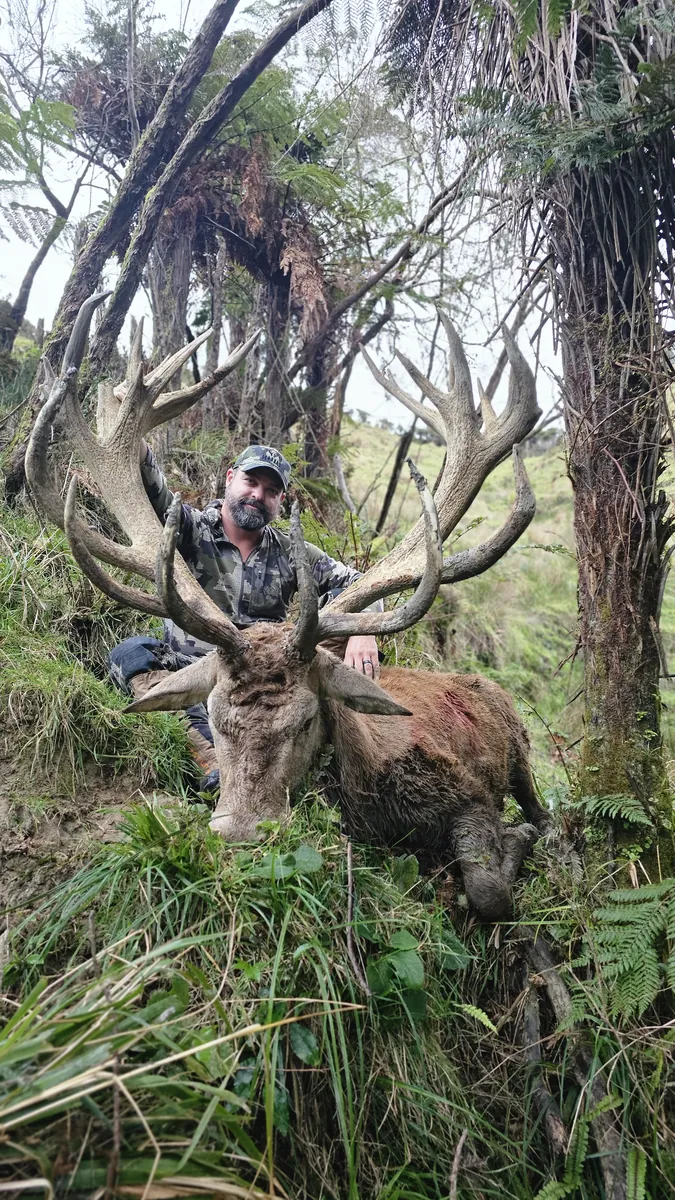
When we went to New Zealand you told me to bring my wife. She doesn’t like hunting, but she had an incredible trip and now she’s on board with more of these things. Once she got comfortable — wine tours, massages, comfortable beds, and knowing Mary’s going — it changed everything.
ERIC KILLEN · 11:00
Mary likes to hunt, but she’s also a girly girl — she wants her spa time. Funny story: I have clients who went to Africa with me, then booked their own New Zealand trip and made all the promises about taking the wife to town and the spas — and none of it happened. He told me, “It wasn’t a Killen Outdoor trip.” It takes a lot of pressure off when you know exactly what you’re getting into. And the pictures I send you — I took those, or one of my guys did. We’re not pulling them off the internet.
SAM McGOUGH · 21:35
Mary’s a crack shot, too. How did you get her into it?
ERIC KILLEN · 22:00
Funny story I’d forgotten — when Mary was in college and pregnant with our second child, she needed an elective, so she got on the rifle team and shot competitively. Years later we were at a skeet shoot with clients, she said she’d like to shoot, and she wore us out — the ladies in the background high-fiving. After that she said she’d like to go hunting with me. I said, “I didn’t even think about it.” She said she didn’t want to bother my time. Her first animal was a Texas doll, and it’s gone from there — bears, elk, antelope at 900 yards.
SAM McGOUGH · 25:35
I’m really interested in trying some of the European hunts — France, Italy, Spain. I love Spain.
ERIC KILLEN · 25:50
We have some things we’re working on in Spain. When I got there I realized they hunt everywhere — driving down the road you’d see guys bird hunting, and in restaurants you’d see fallow and other game. They have a deep history of hunting. We did a private dinner with a chef who taught us to cook, and we talked hunting the whole time. We always take a couple with us on a scouting trip — we call them checkout trips — and they know it’s not a Killen Outdoor trip yet.
SAM McGOUGH · 12:52
You’ve been around a lot of successful people. I came up with this podcast idea sitting at a camp with an Alaskan moose and grizzly guide who said, “If it wasn’t for successful business people, I wouldn’t have a job.” What traits do you see these guys always have?
ERIC KILLEN · 13:30
They’re all goal-oriented — they book these things years in advance because of their work schedules. And we book hunts for everybody, not just the guy who can afford a $30,000 leopard hunt. But they all like the outdoors, and hunting and fishing isn’t a give-me — even the exotic ranches aren’t a give-me. Mostly they’re just driven.
SAM McGOUGH · 14:30
That’s one of the biggest differences — driven versus not. My wife says I’m never satisfied. I’m a happy guy, I’ve had a great life, but I always want more, want better. I’m grateful for the experiences, but relentless about it.
ERIC KILLEN · 15:30
Same — we don’t just do hunts, we do other things, and I can’t even tell you why. We’re different. Every time we do something, we think, “How do I turn that into a business?” Not everybody wants to go through the work; some just want to go through life, and that’s fine. Sometimes I wish I were more like that — I’d be more relaxed. But I don’t think I could live that way, and it’s worked out for us.
SAM McGOUGH · 16:41
Logistics is a big thing for people. How do you keep up with all of it?
ERIC KILLEN · 17:00
I’m old-fashioned — I like my clipboards and my dry-erase board. We have computers and an accounting office, but I still have my dry-erase board where I can look up and see where everybody’s at and where they’re going to be. And we stay in touch — we talk a lot. I had a client here today and we spent 30 minutes going through his Africa paperwork line by line. I usually don’t recommend taking a gun to Africa — they have great guns, you can rent one for $100 — but he wants to carry his, so we make sure it’s right.
SAM McGOUGH · 19:35
And importing the trophies back — I’d never have known how to do that.
ERIC KILLEN · 19:50
It’s simple on your end. I tell you who to call, who to text, who to email, who to pay. The people we work with are the best — they’ll even hold your mounts and deliver and hang them. They called me and asked if it was okay; if you can help a client, do it. For a nominal fee they hang them all — and I just get to go watch.
SAM McGOUGH · 29:00
We talk a lot on this podcast about designing the life you want, and about the keys to success. What do you think yours are?
ERIC KILLEN · 29:21
You’ve got to have a good partner — someone to support you. My wife supports everything I do; she has her opinions, and a lot of times I don’t like them, but if I slow down and listen, she’s usually right. The other thing that’s important to me is I have no debt — because I don’t spend money I don’t have. Everything you see is paid for. When we could afford something, we bought it; when we could do something, we did it. People say I ought to get an American Express and go — I just don’t do that. It’s a personal thing. We’ve got plans to build a bigger lodge, but if I had to say the one reason we’re successful, it’s that we just don’t have debt. It’s all about discipline.
SAM McGOUGH · 32:32
That’s the same in hunting. What traits make a good hunter and a good businessperson — are they similar?
ERIC KILLEN · 32:50
I do think so. A lot of it’s patience — you’ve just got to be patient. And once you’re defeated — and you will be, you’ll miss the shot or not get the opportunity you thought — you have to be persistent and come back and do it again until you get it right. It’s very similar. That’s why I think successful people gravitate toward hunting. I’ve got a good friend going to Australia with us who never hunted, didn’t even own a gun. I took him on his first hunt — a big trophy buffalo and an aoudad — gave him a gun after, and now he’s got 50 or 60 guns and has been all over the world with us. He got it bad.
SAM McGOUGH · 34:38
I always end with this — give me three things you always take into the field.
ERIC KILLEN · 34:50
A knife — I’ve got one I take every time. A hat — a lucky hat. It looks terrible, but it’s in most of my pictures. And my binoculars — I just bought a new pair this year. I like good glass. As far as clothes, I’m a big guy, so I wear a lot of Drake and Game Guard because they’re cut for bigger guys, but I don’t have to have the best camo. Quick story: when I first started really hunting, I finished a work meeting early in my sports coat, dress pants, and dress shoes, drove to the camp, got my gun out of the trunk, and killed the biggest deer I’d ever killed. It doesn’t matter. Keep your feet warm — that’s all I care about.
SAM McGOUGH · 37:00
Thank you so much for being on the show — always a good time. That’s another show for The Hunt for Success. Tune in next time.