Episode 20 with Ben Jordan. Automatically generated and lightly edited for readability.
BEN JORDAN · 0:00
I literally just looked in the mirror one day and I said, “Enough’s enough.” And it’s funny, because that’s right when my business started growing. That was in October of 2017. I said, “Enough is enough.” And from October of ‘17 to July of ‘18, I lost 120 pounds.
SAM McGOUGH · 0:00
Hard work.
BEN JORDAN · 0:00
Yeah, and that was running a company at the same time, not really knowing what I was doing. And here’s the thing, I hate shooting content. Shooting content for me now is like running 10 miles when I was 400 pounds. I just don’t like it.
BEN JORDAN · 0:41
Yesterday I’m sitting in the studio, I’ve got people calling me, I’ve got stuff going on, and the guys are saying, “Hey Ben, we need to shoot this YouTube content.” And I was like, “Oh my gosh, I’m so busy.” My video guys are pretty good at triggering me, so he said, “Hey Ben, are you just gonna make more excuses, or are you actually gonna change somebody’s life today?” I said, “You mother effer.” So I get in there and I shoot three or four bad A YouTube videos.
BEN JORDAN · 1:26
And on my way home this guy DMs me about his plumbing company. I still answer all my own DMs. I love just giving value. I don’t do the coaching because I need money, I do it because I want to change people’s lives, but I understand that if people don’t pay, they won’t pay attention. So I’m talking to this guy, throwing out all this stuff, and he says, “Ben, I just want to thank you for talking to me about my business. What you’re doing and the videos you’re creating have helped me really understand where I need to be in my business. And dude, since I started watching your content I’ve lost 60 pounds.” I’m like, “What?”
BEN JORDAN · 2:30
And then I think back to 45 minutes earlier when I was making all these excuses about why I wasn’t gonna shoot a YouTube video. Can you imagine if I don’t shoot that video that is gonna change somebody’s life? How selfish am I? God has given me this amazing gift to be where I am in life. He’s given me all the trials and the tribulations to create stories for me, stories that I’m now obligated to take and share to the world, to help them in their life, not just to make more money. The reason I talk about money so much is because it’s tangible. People can feel it like I’m holding this Listerine bottle. They base everything off of it because it’s tangible.
BEN JORDAN · 3:11
But in all reality, I want to share my experiences because if you make more money you can help more people, and if you help more people you can continue the cycle of helping and winning and winning and helping. That’s where I’m at in life. And I know for a fact that in the next five to 10 years, there’s gonna be more millionaires pumped out of the trades than any other industry in the world.
SAM McGOUGH · 3:11
It’s happening. You’re seeing this. People just do less. They’re so busy in their lives. Like you said earlier, we value time. I know this works for me in my life. The time it would take to go do the job, I don’t have it.
SAM McGOUGH · 3:57
I’m busy focused on my own life and my own jobs, and so that’s where there’s a big opportunity. Everything’s exploding as far as growth, and you’re gonna need more electricians, more plumbers, more HVAC guys. All the old guys are getting out of it, the private equity groups are doing their thing, and so there’s a huge opportunity for guys that want to bust their tails and grow something.
SAM McGOUGH · 4:41
That’s the reason I got into it. I was so tired of dealing with insurance companies in my world. I was like, man, I want to go where I can do something for somebody, do a good service for them, and they pay me and I don’t have to deal with anything else. I’m so happy we got into the trades.
BEN JORDAN · 4:41
It’s such a rewarding job because literally what you do can affect people’s lives. I was doing a training today and I was talking to my guys. I’m like, “Are we showing up to people’s homes to fix something, or are we showing up to serve them?”
BEN JORDAN · 5:29
That’s what I told the guy on the phone last night. Ask somebody, “What’s the feeling you get when you have to call a plumber?” They’ll say, “Oh gosh, I don’t want to call a plumber.” Why? Because every time we show up to a customer’s home, whether we’re in plumbing, HVAC, or electrical, they’re having a problem. And when they’re having a problem, nine times out of 10 it is expensive as hell to fix. They didn’t budget for it. They didn’t plan on it. Their house is hot, or their water heater blew up and is flooding everywhere. They didn’t get a shower, they didn’t get to go to work. So it’s a bad day, and we’re showing up on those bad days and giving them even worse news.
BEN JORDAN · 6:14
I equate it to this. Imagine every time you show up to the doctor’s office for a routine check they told you you’re gonna have cancer. You’d say, “I’m never going back to this doctor again.” Or, “Every time you show up, you’re gonna get a shot.” Hell no, I’m not going to get no shots. That’s what it is. So I tell my guys, and this is what has changed our business, are we showing up to fix something, or are we showing up to serve? And true service is walking a customer down a path where they can save money by making sure their stuff is taken care of.
BEN JORDAN · 7:01
I’m not saying service is giving it to them for free. What I’m saying is if you’re gonna be a professional, you better make sure they understand that you are the professional. When I go into somebody’s home and I say, “This is the symptom, but here’s the root cause,” I want to make sure you don’t have to see me very often. Here’s the Ben Jordan quote, “The more you see me, the less I’m doing my job.”
SAM McGOUGH · 7:01
That’s a good one.
BEN JORDAN · 7:01
And then it’s, “Hey, I’m gonna set it up so I can come do maintenance on your stuff, so I can make sure that stuff’s not gonna blow up on you at the worst time possible.”
BEN JORDAN · 7:46
Stuff happens. It’s not if something happens on your home, it’s when. And when it does, you don’t ever have to call anybody else. You just pick up the phone and dial 801-833-3333, because Action’s gonna show up. Today, tonight, in the middle of the night, tomorrow, Thanksgiving, Christmas, your birthday, my birthday. Doesn’t matter. They’re gonna show up in your worst time and they’re gonna give you options. But are we really giving customers options? When it’s 120 degrees outside, they don’t have an option.
BEN JORDAN · 8:37
If I can catch the problem in April, I can say, “This is what I’m seeing,” because when it’s 120 degrees in August you’re gonna have to replace it, and supply and demand kicks in at that point. Everybody’s having to change their systems. But I’m your guy, and I’m the one that’s gonna have the hard conversation with you, or the good conversation. That’s what true service is. When I hire a mentor, I don’t want him to sit there and kiss my butt and say, “Oh Ben, you’re doing so good.” I don’t give a crap about that. I want him to tell me, “This is where you’re having problems, and this is what we need to do to fix it.”
BEN JORDAN · 9:20
My goal is to get to every company I possibly can and teach them that service is the way we take care of our customers. We have to be serving them, not just showing up and fixing stuff. Any Joe Schmo can show up and change a water heater. Any Joe Schmo can fix a P-trap. But not everybody can say, “You’re having an issue with your drain, I’m gonna camera your sewer.”
BEN JORDAN · 10:02
And your sewer’s actually the one causing the issue, so let’s fix the sewer before you have to repeat this process. Can you imagine if you lived in a Groundhog Day of problems? I have customers that do. Every day we see customers living in a Groundhog Day of crap, and they hate it. I’ve been to customers’ homes where they had to quit their jobs because they were getting carbon monoxide poisoned. They’d had their stuff serviced two or three times by other companies and nobody caught it until we showed up.
BEN JORDAN · 10:45
They literally had to quit their jobs because they thought they were terminally ill, and no one could figure out what was wrong with them.
SAM McGOUGH · 10:45
Wow. You would not think that you would hear that in your industry, but you do.
BEN JORDAN · 11:30
That’s it. Most guys are out there stuck chasing leads, blaming the market, relying on talent they don’t even know is true talent. And the real problem is not the leads, it’s not the market, it’s not the talent. It’s the systems and the standards and the consistency they have. You remember Glengarry Glen Ross? “The leads are weak.” No, he says, “You’re weak.” Honestly, I don’t believe in a bad lead.
SAM McGOUGH · 11:30
Wow.
BEN JORDAN · 11:30
If I can get into somebody’s home and figure out what’s going on, there’s no bad leads. I don’t close 100 percent, I don’t. But I don’t believe there is a bad lead on this planet. If I get an opportunity to be in their home serving them, I promise you more often than not I’m gonna take care of them and I’m gonna be their company for life.
SAM McGOUGH · 12:16
Switching gears, this is a show about hunting. How and when did you get into hunting?
BEN JORDAN · 12:16
I’ve been hunting my whole life. I was probably eight years old, my dad was an avid elk hunter in Colorado, and Colorado is known for having some of the biggest elk populations on the planet. All my uncles, my dad, we’d always take a trip. We had one of those old army teepee tents with the wood burning stove in it. We’d go out in the hills and camp out and take our horses.
BEN JORDAN · 12:58
And I’m not talking road hunting. I’m talking hiking four or five miles deep, killing these elk. I was probably 15 or 16, and we had this elk herd come through. It’s easy to get a cow tag in Colorado, and the bull tags are over the counter, so the kids always draw the cow tags. We’d hunt with a party of 25 people. That herd came through, I shot a cow, six of my brothers and sisters shot cows. We had three bull elk dead and I think eight cows killed.
SAM McGOUGH · 13:38
That is a lot of elk to field dress. That’s a lot of work.
BEN JORDAN · 13:38
I promise you, in one day I gutted more elk than most people have ever seen in their life. That was vivid for me. As I got older I moved to Utah, and we would still drive back to Colorado and elk hunt. Hunting for me has always been big. One of my dad’s best friends was a real successful contractor from Kentucky, and him and his dad ran a billion dollar construction company down there.
BEN JORDAN · 14:23
They would go to Africa, and he would tell us these crazy stories, shooting hippos, going to New Zealand, going to Alberta, shooting all these animals. And I said, “One day I’m gonna go to Africa.” My mom’s aunt, which would make her my great aunt, really raised us when my mom passed away. She always wanted to travel her whole life and never had the means to do it. I promised her when I was 11 or 12 years old, “One day I’m gonna take you to travel the world.”
BEN JORDAN · 15:04
We went to New Zealand last year. We went to Africa. This year we’re going to Alaska, and I’ve been taking her with us on these crazy hunts. It’s been such a blessing. And the craziest thing is the trades have paid for it all.
SAM McGOUGH · 15:04
That’s awesome, if you just put the right plan in place.
BEN JORDAN · 15:04
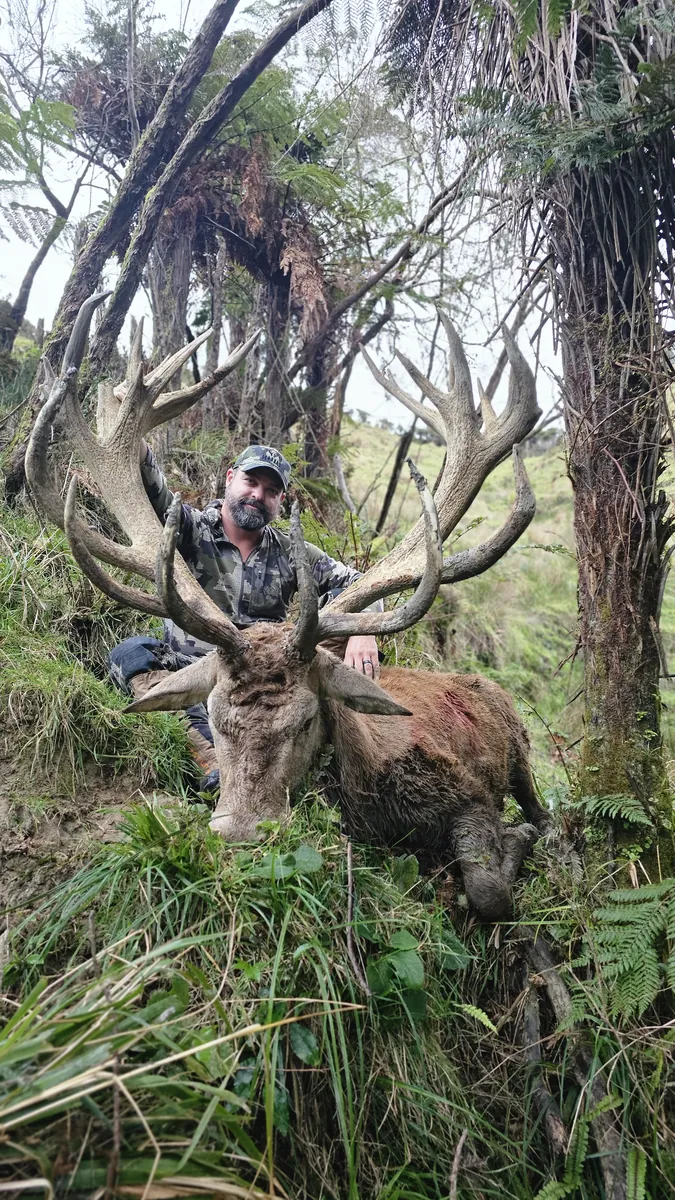
Last year I got the gov tag bull elk in New Mexico, and I shot a 423 bull down there.
SAM McGOUGH · 15:46
I saw that too.
BEN JORDAN · 15:46
Not many people get to put their hands on a 400 inch elk. And my brother bought a special tag, an orphanage tag there in New Mexico, a five day hunt, and he ended up shooting a 404, 405 bull last year. It was amazing. Hunting to me has always been my getaway.
SAM McGOUGH · 15:46
I was gonna say, is it something most people use as a recharge, a way to get out there in the outdoors?
BEN JORDAN · 16:30
It recharges my batteries, and the thing is, hunting is American. Not many people understand what America is, or what it means to be a true American. I’m not saying everybody’s got to hunt, but being out in the wilderness, most of the time if I don’t shoot anything I’m happy. I’m happy hiking around, happy being in nature. When I go hunting I like being in a wall tent, roughing it, where you don’t have the amenities of an RV. You don’t have a heater, you’re chopping up wood and putting it in your wood stove.
SAM McGOUGH · 17:10
That’s part of it, the physical part and the suffering part. I grew up that way too, and I’ve also gotten to go on some of those really nice ones. I took my wife to New Zealand last year and that was the bougiest hunt ever. I told her, this is not what it’s really like, but this is the best I can do, because she is not gonna go to my hunting cabin where it’s off the grid and hang out.
BEN JORDAN · 17:54
And the lessons you can teach your kids. I take my kids hunting with me. I remember getting taken by my dad, and now my kids are always asking, “Dad, do I get my hunter safety this year?” I’m like, “You’re not old enough yet, but let’s keep on going.” We keep going through the process, making sure they understand what life’s about, because life changes. We came from living in Utah. We had 18 acres, we had horses and cows. Now we live right here in Scottsdale and it’s more of a city life.
BEN JORDAN · 18:36
I want them to still understand what life’s about, being out in nature, being able to provide, understanding how to get around and how to live off the land, and not being so dependent.
SAM McGOUGH · 18:36
It gives you a sense of freedom. I was literally on the phone with a guy today who lives in the city in Atlanta, and he was worried about something going bad. I said, “Dude, I’d be fine.” I’d probably thrive. He couldn’t understand that.
SAM McGOUGH · 19:19
I told him I don’t want to be around people, I’d be fine with that happening. And he said, “My dad used to carry me fishing, but I didn’t like sitting out there if I wasn’t catching anything.” I said, “Then you’re not a fisherman.” We enjoy it even if we’re not catching anything.
BEN JORDAN · 19:19
Just being out there and going through the process. And I equate a lot of hunting to business. Everybody likes winning. Nobody likes going through the process. Everybody likes getting the kill.
BEN JORDAN · 19:59
My dad used to always say this to me. Every time I’d pull the trigger, boom, the animal would go down, and the first thing he’d say was, “Now the work begins, son.” Fun’s over. That’s just like business. The sale’s made, now the work begins. Nothing happens until a sale is made, nothing happens until you drop the animal. But that’s when the work begins, and that’s the fun part. People don’t embrace the work. They don’t embrace that harvesting of an animal like they should.
SAM McGOUGH · 20:44
I think hunting teaches you to enjoy the work as much or more than the actual kill. I love butchering an animal. There’s just something about it. And in business we learn that too. I liked the process more than the goal. When I hit the goal, it’s okay, now I’ve got to start all over on a new process.
BEN JORDAN · 20:44
That’s how you can infinitely scale. In business you’re never plateaued. I hear it all the time, “I just feel like I’m plateaued.” Honestly, brother, I’m sorry to be the one to tell you this, but you’re not plateauing.
BEN JORDAN · 21:25
You’re actually going downhill. There’s up and there’s down in business. And that’s the one thing about hunting, it teaches that. Some of the most successful people I know are avid hunters, and they’re addicted to that cycle. If I’m gonna set a goal to harvest this elk, I’m gonna work my butt off. And then when I harvest the animal, now I’m gonna work my butt off and keep going.
BEN JORDAN · 22:06
And then I’m gonna raise my standards and go at it again.
SAM McGOUGH · 22:06
That’s why I enjoy it so much, and that’s why I started this podcast. I recognized the same thing. A lot of successful entrepreneurs, that’s their only time to get away, part of how they recharge, but they also enjoy the process. They enjoy all the little things. Cleaning your rifle, getting everything tuned up. On this side of the country, I know you’re out west, a lot of it is preparing your farm or your hunting ground.
SAM McGOUGH · 22:47
Whether it’s the farming aspect of planting green fields, or getting all your blinds set up correctly. I enjoy the work as much as I enjoy the hunt.
BEN JORDAN · 22:47
You know what’s crazy, ever since we started coaching with you guys, my brother John, he’s my best friend and my business partner. And for some reason, we’re elk hunters, and elk hunters don’t really like deer hunting.
BEN JORDAN · 23:30
I’ve shot a 190 inch buck and it’s whatever. But elk to me, I could shoot a 200 inch elk and it’s the greatest thing, I’ll take pictures with it. And he tells me this year, “Hey Ben, I think we should buy some land in Kansas and hunt whitetail.” I said, “What? You want to hunt whitetail? I can understand mule deer, but whitetail?” He said, “No dude, I found a spot.” I swear to goodness, we bought some land in Kansas. He’s farming it, he’s over there ripping trees out and setting up food plots.
BEN JORDAN · 24:12
He’s got cameras everywhere because we’ve got tons of turkeys on there, and turkey season’s coming up. We’ve got peacocks and coyotes, and we’ve got some pretty big bucks on this property. We’re building a big old barndominium, we just drilled our well, it’s gonna be all set up with our skinning shack. It’s gonna be the real deal, and that stuff is just cool to me. It’s so rewarding when you get it set up.
BEN JORDAN · 24:53
Not this week but next week we’re going out there and taking the boys, because John’s son and my son are the same age, and we’re going turkey hunting.
SAM McGOUGH · 24:53
That sounds awesome.
BEN JORDAN · 24:53
We’ve got some blinds set up. I can’t thank the Lord enough for giving me the opportunity to be in the position I’m in to do stuff like that with my kids, to do something like that with my brothers. It gives me chills. It tears me up thinking about it, because if I don’t start my business, if I don’t go through the stuff I went through, I might not have the opportunities I have right now.
BEN JORDAN · 25:46
Most guys, when they think about jumping into business, they think, what if this doesn’t happen? I think about it as, if I don’t do this, what if I don’t get to have that opportunity with my kid? What if I don’t get to have that opportunity with my brother? We had a birthday party for my oldest daughter yesterday. She’s 11 years old today. Yesterday she was in my arms and I was holding her at the hospital.
SAM McGOUGH · 25:46
Yeah, I know the feeling.
BEN JORDAN · 26:26
It goes by that fast. Are we gonna be a victim of time, or are we gonna be the perpetuator of having a new life? We have that opportunity. No one else is gonna set limits on you that you don’t set on yourself.
SAM McGOUGH · 26:26
So what’s next for Ben Jordan?
BEN JORDAN · 26:26
When I first got into the trades I told my brothers, “Guys, we’re gonna build the biggest plumbing company this country’s ever seen, because I want to change the industry.” We built a huge plumbing company, and nothing’s changed. So I’m sitting there thinking, what’s going on? And as I get to know other people, I see people online, and I’m like, man, it’s not about the company I built.
BEN JORDAN · 27:15
It’s about the way that we do stuff. So now I know my plan, and what God’s got in store for me, is this coaching company. This coaching company is gonna help me change more people’s lives. It’s gonna help me make more people millionaires than I could ever do within my own business. I love being an operator. I love everything there is about plumbing and HVAC and running a business, but my goal is to change the masses. So right now it’s just figuring out this social media stuff. I’ve got to get in front of as many eyes as I possibly can.
BEN JORDAN · 27:57
We are going to change the industry. Do I do everything correctly? No. There are a bunch of guys in the industry I look up to and learn from every single day. But I’m gonna get as big and be in front of as many eyes as I possibly can, because I want people to understand that the trades is not blue collar the way they think. I did this study with my guys the other day. I said, “When you hear the word blue collar, what do you think of?” They said, “Laborer. Dirty.” They had a whole list. And I said, “You know what’s crazy? I know blue collar guys making more than doctors.” But we have the stigma of what blue collar is.
BEN JORDAN · 28:43
It’s like when you hear the word salesman. What do you think of? Used car guy, slime ball. No, sales is service. When you really change your idea of what that word means, all of a sudden you open up new areas. A lot of guys in our industry think of themselves as just some blue collar guy, some suspender wearing, butt crack showing, never gonna get out of the trailer park type. When really they’re sitting on a gold mine. They’re sitting on a company that can change thousands of people’s lives, and not just other people’s lives, but their own family’s lives.
BEN JORDAN · 29:25
And the people that work for them, their lives. I haven’t really told many people this, but as an ownership group we just came to the conclusion that we’re gonna sell our plumbing business. Obviously we’ll have to stay on and keep running things. And my goal is to make 1,000 millionaires in the next 10 years.
SAM McGOUGH · 29:25
That’s a great goal.
BEN JORDAN · 29:25
I have a really good plan of how I’m gonna do it. I know for a fact on the coaching side I’m gonna do it, but I want to make 1,000 millionaires out of my people that are right here with me.
BEN JORDAN · 30:11
In 10 years, that’s 100 millionaires a year. That’s easy. We can do that just by shifting the way people think.
SAM McGOUGH · 30:11
I can’t wait to be a part of it, because we’re with you guys.
BEN JORDAN · 30:11
And we can’t do it without people like you guys. I already see the shift in Brandon, I already see the shift in your business, and we’re barely getting started. We’re barely warmed up. Trent and those guys over here that are studying with us,
BEN JORDAN · 30:53
they literally did 115K in revenue in their first three weeks of studying with us. How do you get those kind of results? Where do you get those kind of results?
SAM McGOUGH · 30:53
You did so much for Brandon. I was working on him myself, but you did so much with him, his mindset. He really had a servant mindset, but the wrong way. He just thought he could give things away. And I know you’re a big watch guy, I’m a big watch guy, I love watches. I started explaining the mechanical movements to Brandon, so he started really liking it.
SAM McGOUGH · 31:35
And when we were in your shop, I said, “I just want you to know, these are tradesmen sitting around you, and there’s $100,000 worth of watches in this room.” These guys are running around doing service calls with a $20,000 watch on their hand, or a $15,000 watch. I said, “You just need to change the way you think about money and the way you think about what you do for a living and the service you provide.” It’s made a big difference. He got fed up with where he was at, knowing full well he had more potential.
BEN JORDAN · 32:20
That’s the biggest thing. In everybody’s life there’s a monumental time where people either get fed up with where they’re going and change and go in the direction they know they need to go, or they give up. And a lot of guys have no direction. They don’t know where to run. They’ve been running so hard for so many years, they’re just like, “I can’t do it.”
BEN JORDAN · 33:05
That’s what I want to change. I want to get in front of as many eyes as I can. I want people to see what we’re doing and how we’re doing it so we can help change their life. Because when it comes down to it, investing in yourself will be the best investment you ever make. Me investing into losing weight, into my body, my spiritual side, my family, has been the best thing I’ve ever done. I’ve made great money off my investments, and never one investment I’ve ever made has been better than investing in myself. And the number two investment is investing into my team.
SAM McGOUGH · 33:05
Most people don’t do either. They don’t learn, they don’t keep investing, and they don’t invest into their team.
SAM McGOUGH · 33:47
That’s another thing I really appreciated when I saw your team training every day. A lot of good teams will have a training a couple times a year. Great teams are training all the time. That’s impressive. It’s just that standard.
BEN JORDAN · 33:47
It’s that standard. We might not be the biggest, we might not be the smartest, but I promise you there is not one company out there that’s gonna outwork us. There ain’t one company that can be as consistent as we are, because we are just ruthless, and we know it’s all in the consistency. The more consistent we are, the better off we’re gonna be.
SAM McGOUGH · 33:47
Any last words of wisdom?
BEN JORDAN · 33:47
Man, I just want everybody out there to know how important they are.
BEN JORDAN · 34:31
I lost sight of who I was. I didn’t know how important I was in this world until I started believing in me. It just took me waking up one day and saying, “You know what, God put me on this planet for a reason. What am I gonna do with it?” Either I can die right now and no one will know anything, or I can level up to the potential I have and be somebody in this world who helps as many people as he can. I just want everybody in this world to know how much potential they have, because everybody’s got it. Everybody’s got the grace that God has given them, and they just need to buckle down and do something about it.
SAM McGOUGH · 35:17
Thanks again for tuning in for The Hunt for Success. Next week we’ll be talking to more entrepreneurs and business people that love to hunt and fish. Thanks, Ben, for showing up and giving us such great value this week.
BEN JORDAN · 35:17
Anytime. Thank you so much for having me.