Episode 06 with Will Bamber. Automatically generated and lightly edited for readability.
SAM McGOUGH · 00:00
Welcome back to the Hunt for Success podcast. Today I have Will Bamber. Will and his family own one of my favorite places in the world — a hunting safari in New Zealand. Will, how long has this been in your family?
WILL BAMBER · 01:00
It’s gone through its iterations because of the family history. Now being fifth generation, the land’s in a trust through my great-grandfather. The original trading company was actually called AU Trading, and you may have seen a lot of the old history in the lodge — the wool presses from when it was a sheep station. The safari side came about in the early eighties.
SAM McGOUGH · 01:40
That was interesting to me when I met your dad and was at your lodge — it’s been in the family a hundred-and-something years. Before we get into the lodge, you’re an interesting guy. Tell people how you got into racing and what you do.
WILL BAMBER · 02:00
“Interesting” is probably a decent word. I live a very multifaceted life. I have a professional racing career — we grew up racing go-karts in New Zealand, it’s been a big family thing all our lives. I lived in Asia for five years racing professionally, then came to the States around COVID to find new opportunities, met my wife, and now I race in the Lamborghini Super Trofeo and a GT championship in North America. My brother races too, so it’s a big family thing. And I also do a lot of software development for the company — ERP and CRM, a lot of automations to make our small company as efficient as possible.
SAM McGOUGH · 03:30
I’d love to be in a business like that — working inside something you love. Do you ever worry it becomes work?
WILL BAMBER · 03:50
In each field I’m a creative person — I like new challenges and making solutions with people. On the hunting side, it’s cool to have equity in building something special; the return on that time is amplified. The team in New Zealand is very young and very close — my wife, the twins Tom and Angus, their partners. A small core team, always a group chat flowing. You could get burnt out, sure — some of our guides used to hunt all year round. But over time they’ve taken more joy in passing it to guests, taking new people out, than in doing it themselves. I do the same with racing — I coach a lot, and there’s more reward in passing knowledge through to other people than in another perfect lap.
SAM McGOUGH · 08:30
Your team feels like a family, and your dad sets that tone.
WILL BAMBER · 08:50
It’s a reflection of my dad — he worked the land, he’s a hard man, the type who can meet you off the street and you immediately don’t want to disappoint him. But day one it’s been about people. In the off-season — New Zealand summer — old friends from his high school days come over and they’re grilling outside; that place is never empty. The hunting slows down but it’s all about sharing. That culture is reflected in the whole team now.
WILL BAMBER · 10:30
We built a cloud ERP to handle everything — CRM, admin, sales, leads and opportunities through the pipeline to finance. Now we have data, so it’s really cool to see the return rates: 60, 70% of people come back, often every couple of years. There’s no Africa-style species count, but people want to come back and they bring friends because they have such a fun time. It’s all bundled together really well at the moment.
SAM McGOUGH · 11:15
You’ve built a great culture and now you’re layering systems on top. How much emphasis do you put on the systems to grow?
WILL BAMBER · 11:30
People always come first. You can take away all these systems, and if you just do the fundamentals well, you’re going to be in a really good place. We can’t do it without great people who know our land. The most feedback we get is about the people. The hunting industry’s tricky — a lot of people have great trophies — so it’s really about where you’re doing it and who you’re doing it with.
WILL BAMBER · 14:30
The software has been very undervalued in the hunting industry. Say you ask me to bring a group down — in the past that was an email, a PDF, a manual quote. Now we produce a customized, fully branded proposal in five to ten seconds. Post-hunt, instead of Dad or me making an invoice, the team fills in what you took — all the products and pricing are in there — and presses a button, and you get your invoice automatically. The accountant tracks it instantly. A very lean model with a lot of transparency.
SAM McGOUGH · 16:00
I talk to a lot of business owners — numbers and data are the big thing. The more you can look at it and tweak it, the more you control your marketing and operations. If you don’t track the data, you don’t really have a business.
WILL BAMBER · 16:20
Exactly. Right now I can tell you red stag is 71% of our business, down to the value. I can tell you what trophy sizes get taken most and when, where we see elk, how to look after herd numbers. And even with acquisitions — which trade show generated the best people long-term, not just one-offs. It’s putting a method to the madness after all these years.
WILL BAMBER · 18:30
I’m lucky that from my own software ventures, AI is becoming very useful — mostly in processing and admin. We can do lookups so we get to know who a guest is, even personality traits so we communicate better. And instead of someone manually typing a vendor invoice into the accounting system, we use AI to extract the details, make it usable data, and tag it against a project so we can see profitability. With heavy single-transaction receivables and Dad getting older, that’s where technology helps the most.
SAM McGOUGH · 21:30
You guys have such a good thing, but at the Safari Club show I didn’t realize how much competition you have on your island. Every aisle, another New Zealand outfitter.
WILL BAMBER · 21:50
There are 38 or 40 at SCI now, which is wild. Maybe five to ten are the original, significant outfitters doing 50-plus hunts a year, and a lot are smaller — ten or fewer, which is where everyone started. It would be very hard to get started now. I’m lucky and blessed for the groundwork my parents did being over very early. But the networking side is tough, and I don’t think Kiwis realize how much is involved — if you don’t get out and meet people at the bar or the restaurant, you’ll end up by the bathrooms in the corner. Our US marketing expense from catching up with people over dinners is insane, but it’s the least we can do, and it’s fun.
SAM McGOUGH · 24:30
I was watching you guys — the shows start in January and run through February. It’s also a party. How do you do it?
WILL BAMBER · 25:00
Our culture is to be fun — we’re a luxury lodge where you can kick your shoes off, have a margarita outside, and speak freely. Our booth always has beers and New Zealand wine. But honestly, we’re lucky to make these connections — people from different industries all over the world, genuine relationships we keep for decades. Of course it has to be a mutual transaction; there has to be a sale. But we catch up with people every year who haven’t hunted as clients in decades, and that relationship is genuine. The smallest guest and the largest hunter get the same experience — that’s how Granddaddy taught us to do it.
SAM McGOUGH · 40:00
Last time I want some possums — you had one mounted at your show and I said I want one.
WILL BAMBER · 40:20
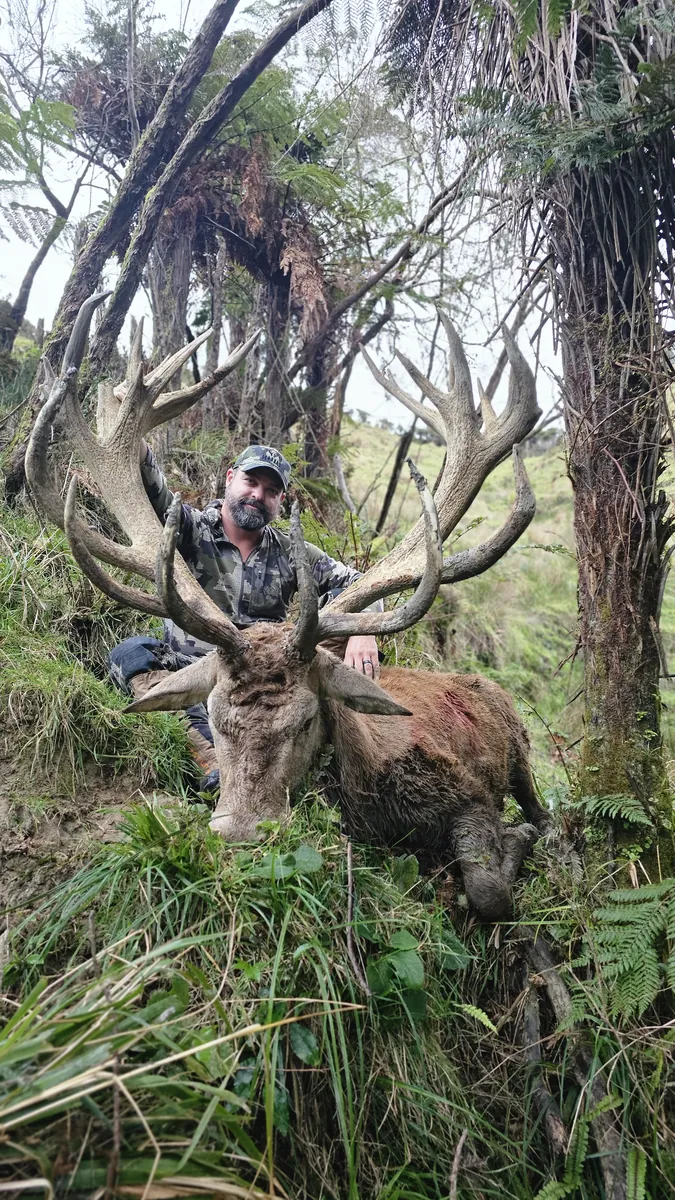
The possum and the wallaby are single-handedly the most stopping thing at a trade show I’ve ever seen. Possums in New Zealand are invasive — no predators, so they breed fast and destroy the forests. Frankly the best thing for numbers is to hunt them; when we were kids we’d shoot 50 to a hundred a night and pluck them, because possum is about the second-warmest wool in the world. Last year we had a 700-inch red stag on the booth, and almost nobody asked about it — there are stags and elk everywhere. But the possum? I had maybe 150 people stop, talk, and want to come down. It was all the possum.
SAM McGOUGH · 40:40
What’s the story with the cage your dad built?
WILL BAMBER · 40:55
Classic “why I love my dad” project. He wanted to bring the possums to the people — if you feed them they’re actually pretty kind, they’ll jump on your lap. But they’re feral, so the domesticated ones get beaten up by the jealous ones. So Dad built this cage — not just a cage, basically Fort Knox, all custom steel, so big and heavy. And it never worked; the possums always got out, they’re sneaky. So where you saw the possum cage is now a very expensive chicken coop.
WILL BAMBER · 29:00
One thing Dad and I are getting ahead of: I’m now married and trying to have work-life balance and start a family, and a lot of our guides are starting families too. Our average age is about 30, so we have a group who could be doing this for decades — and we want to protect that. Even something simple: next year we’ll work later in the season when it’s colder, so people can get a real weekend. You drop guests at the airport Friday and then spend time with your kids and your wife. All over the world people just jam it in as long as possible and get burned out fast. Happy wife, happy life — so we’re building that balance for the long term.
SAM McGOUGH · 33:00
It’s really cool what you’re doing. You’ve got a great business, you’ve been in other businesses, and in the hunting world it’s not every day the lodge owners are also business people. And of course it’s pretty cool to say you race for Lamborghini.
WILL BAMBER · 36:30
It’s very lucky. My wife Sarah helps me keep things balanced. When I just did racing, I’d get a lot more nervous — you go down a desperate path, “if this doesn’t work I’ve got nothing, my life is defined by this.” Doing other things changed that. Now I really appreciate it and just enjoy it, and that’s actually raised my performance significantly, because I’m not worried about what people think — I’ll just work my ass off to see how good I can be. Knowing the ranch and other ventures are there is a blessing. Different avenues keep me relaxed, and it helps with burnout — I can change the mindset and balance around a bit instead of just hunting, hunting, hunting.
SAM McGOUGH · 43:30
Well, I appreciate you being on the show. I love your company, I love your place — it’s one of my favorite places in the world — and I’d love to come to one of your races. Thanks, Will, for coming on.
WILL BAMBER · 44:00
Let me know when the next time is going to be. I’ll be right here with you, mate. Thank you.