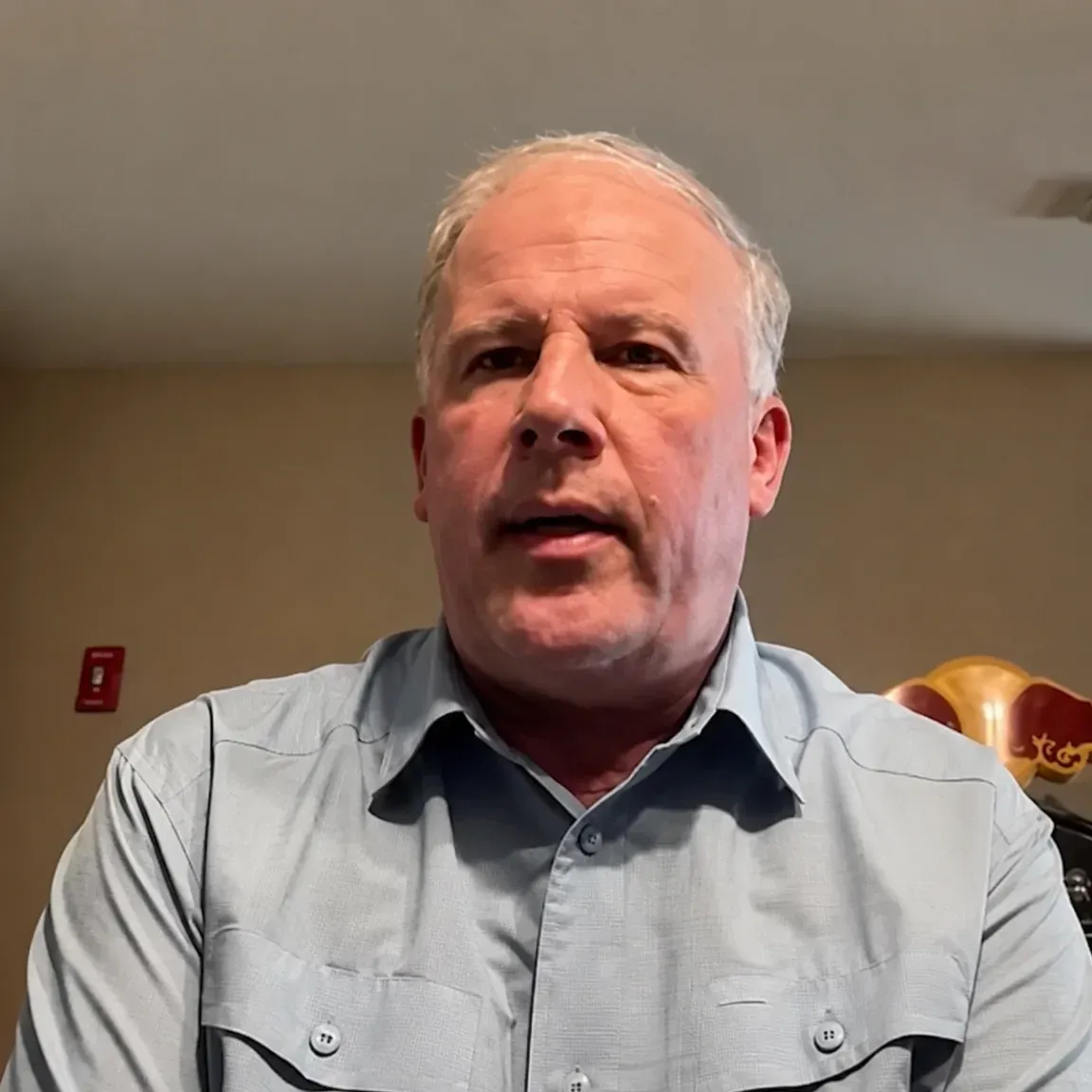
Mark Baker
President & Owner, ACRE Development Corp.
A lifelong Prince Edward Island angler from the bluefin tuna capital of the world — chasing sea trout, striped bass, and Atlantic salmon across the island's rivers and the Gulf of St. Lawrence.
- Ground-Up Development
- Commercial Real Estate
- Risk Quantification
- Site Selection
- Family Business Transition
About Mark Baker
What Mark built
A second-generation operator who grew up in his family's business on Prince Edward Island — his dad introduced two gas pumps to a tire shop in 1980, and by the mid-'90s Mark was running the gas station himself. He and his wife took over, tore the old site down and rebuilt it from the ground up in 2007, operated it for a decade, then leased it to a larger regional operator. That lease was his on-ramp to commercial real estate: he founded ACRE Development Corp. and for the last three years has run ground-up commercial development full time, securing premium locations and building out spaces for national and international brands across Atlantic Canada.
Mark in the field
Born and raised on Prince Edward Island, surrounded by water on a small island, Mark grew up around small-fowl and waterfowl hunting — duck and Canada goose are big there — and has spent a lifetime fishing the river systems, ponds, and streams. PEI is the bluefin tuna capital of the world and home to a world-renowned shellfish and oyster fishery, and Mark talks about the striped bass and Atlantic salmon runs that have come on strong in the last decade. He's quick to say he's no longer much use with a tool belt on — his love is the planning, the hunt for the right property, and the long build, not the day-to-day operating grind.
Why this conversation matters
Mark reframes how entrepreneurs should think about risk: it isn't recklessness and it isn't something to avoid — it's a vague word you make finite by immersing yourself in your niche until you can quantify it down to a number. He breaks down the three pillars of any real estate deal (capital, knowledge, and the ability to execute) and why the capital is the part you can always source if you own the other two. He's candid that the slow-and-steady, same-paycheck-forever path feels riskier to him than the occasional loss, and he draws a straight line from the 18-to-24-month patience of ground-up development to the patience of the outdoor hunt — the preparation is the part he loves most.
“When you really understand fully what you're doing and you immerse yourself in that path and gain knowledge and experience, you can really mitigate risk down to a really finite, quantified number.”
Mark Baker on The Hunt for Success
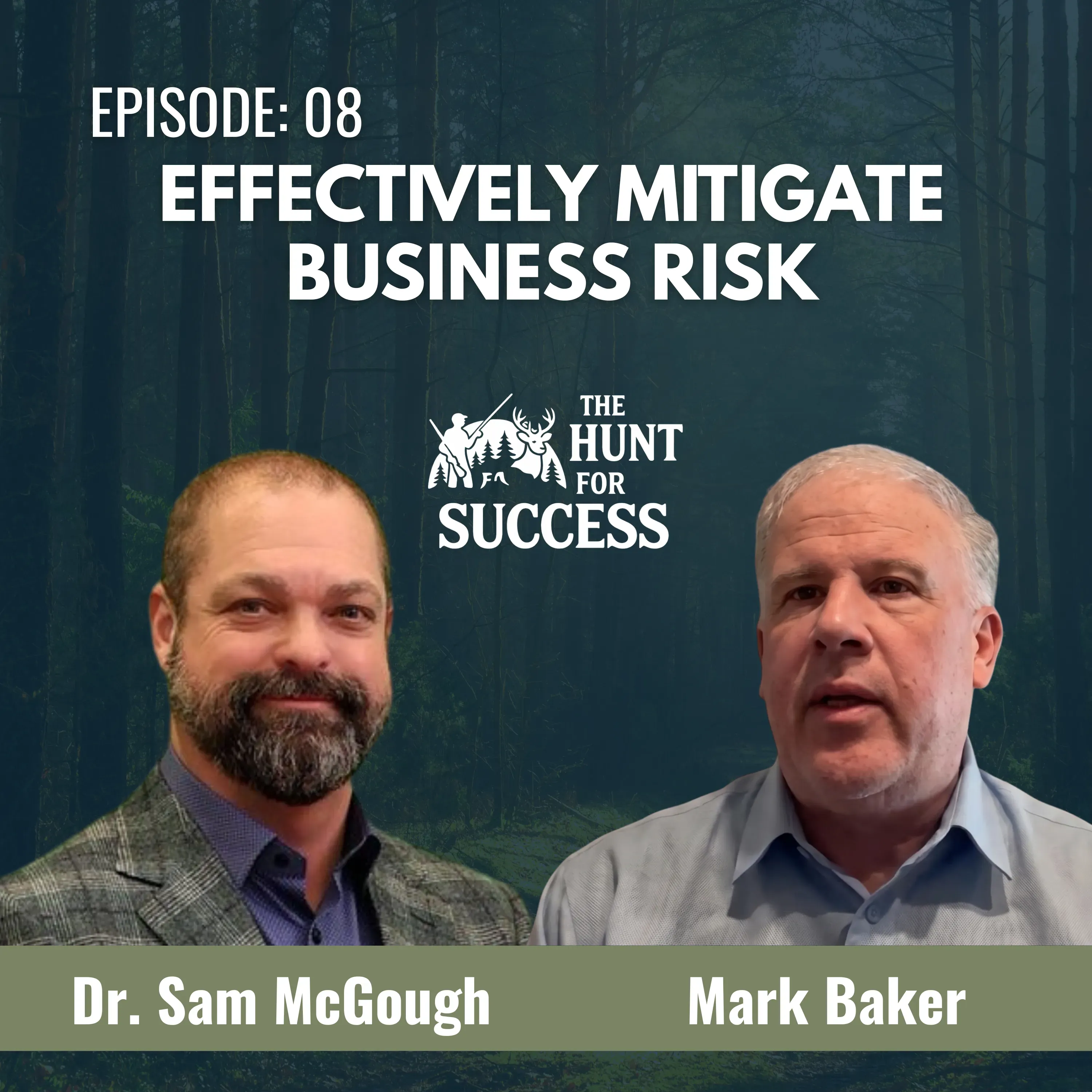
Sam McGough's full conversation with Mark, available on YouTube, Spotify, and Apple Podcasts.
Key takeaways from Mark Baker
The ideas Mark left on the table in episode 08.
-
Risk is a vague word — your job is to make it finite.
You can't be risk-averse in real estate, but recklessness isn't the alternative. When you fully understand what you're doing, have a path forward, and immerse yourself in it to gain knowledge and experience, you can mitigate risk down to a really finite, quantified number. The fear shrinks as the understanding grows.
-
Stay in your lane until it's truly working.
Mark doesn't dip a toe in residential — plenty of people do well there, he just doesn't have the knowledge, so he focuses on commercial. The brands he works with do one thing extremely well and then scale; he runs the same play. The "seven streams of income" advice is backwards: you shouldn't have seven until you have one working really well.
-
Capital, knowledge, and execution — and capital is the findable one.
A successful development project needs three things: capital, knowledge, and the ability to execute. The misconception is that you need all the capital yourself. You don't — if you have the knowledge and the ability to execute, investors will happily participate in a deal. Nobody has the capital starting out.
-
The 'safe' path can be the riskiest one.
Mark finds it strange that working the same job for the same pay your whole life, with no incentive and no possibility of a jump, gets called safe. To him that slow-and-steady road looks more risky than taking a loss every once in a while on the way to building something.