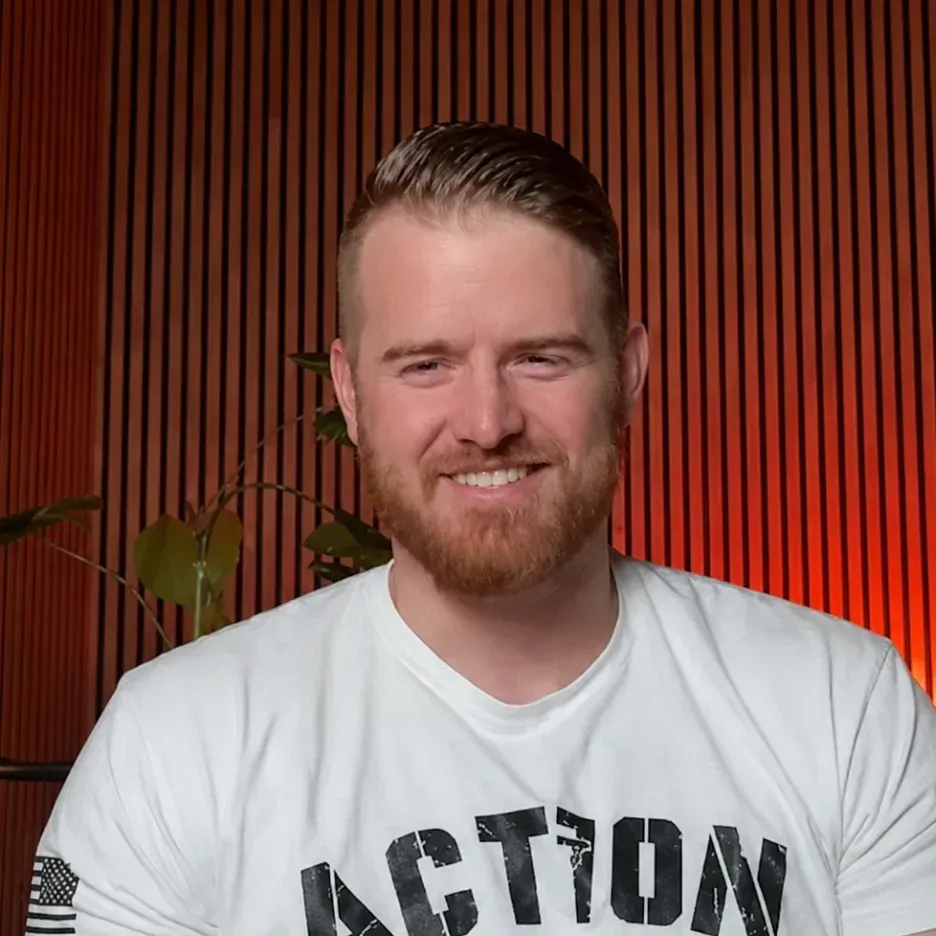
Theron Leany
Partner & Operator, Action Plumbing, Heating, Air & Electric, Action Plumbing / The Action Group
A Utah bowhunter who unplugs on no-service elk and mule deer trips, found his best hunt yet in New Mexico's Gila, and is building a Kansas whitetail spot to bring his four daughters into the field.
- Home Services Operations
- Multi-State Expansion
- Hiring High Character
- Trades Business Consulting
- Extreme Ownership
About Theron Leany
What Theron built
Grew up doing appliance repair in Salt Lake City until a car accident on his church mission damaged his spine and ended the hands-on work. He pivoted into sales — finance, inside, auto — then approached his cousin Ben Jordan, who had started a plumbing company, and took a pay cut to $50K a year to learn the business from the inside. By treating it as his own and making himself invaluable, he earned an equity stake, and the company became Action Plumbing, Heating, Air & Electric — a home-services operation now running across four to five states. Alongside Ben, he runs The Action Group, a consulting firm that teaches other home-service owners the systems and structure behind their growth.
Theron in the field
A bowhunter who got into archery seriously because of his in-laws — their family hunt in Utah is a two-week reunion, and Theron carved out the mountain as his own. He hunts elk (his favorite — the taste, the difficulty with a bow), chases mule deer in Utah, and calls a first trip to New Mexico's Gila, where the elk are everywhere but a world away, the best hunting he's done. He and the family picked up property in Kansas and just put in food plots, building a whitetail spot to introduce his four daughters to the hunt. For him, the trips are the rare place with no phone service — active meditation away from the constant motion of a multi-state operation.
Why this conversation matters
Theron is the show's clearest case study in the intrapreneur mindset: the employee who takes extreme ownership, makes himself invaluable, and asks for the equity rather than waiting to be handed it. He argues most owners stall because they lose sight of the "why" they started — and that anchoring back to it makes the structure obvious. He tells the story of an eight-man walkout that forced Action to stop poaching industry hires and start hiring high character from outside the trades, because the techs who care the most out-sell everyone. And he's blunt that real growth comes from specific, tactical, repeatable steps — not motivational "rah-rah" — the same patience and willingness to fail that hunting teaches.
“It required that entrepreneur mindset of: I'm going to take it as if it's my own. I'm going to take that extreme ownership.”
Theron Leany on The Hunt for Success
Sam McGough's full conversation with Theron, available on YouTube, Spotify, and Apple Podcasts.
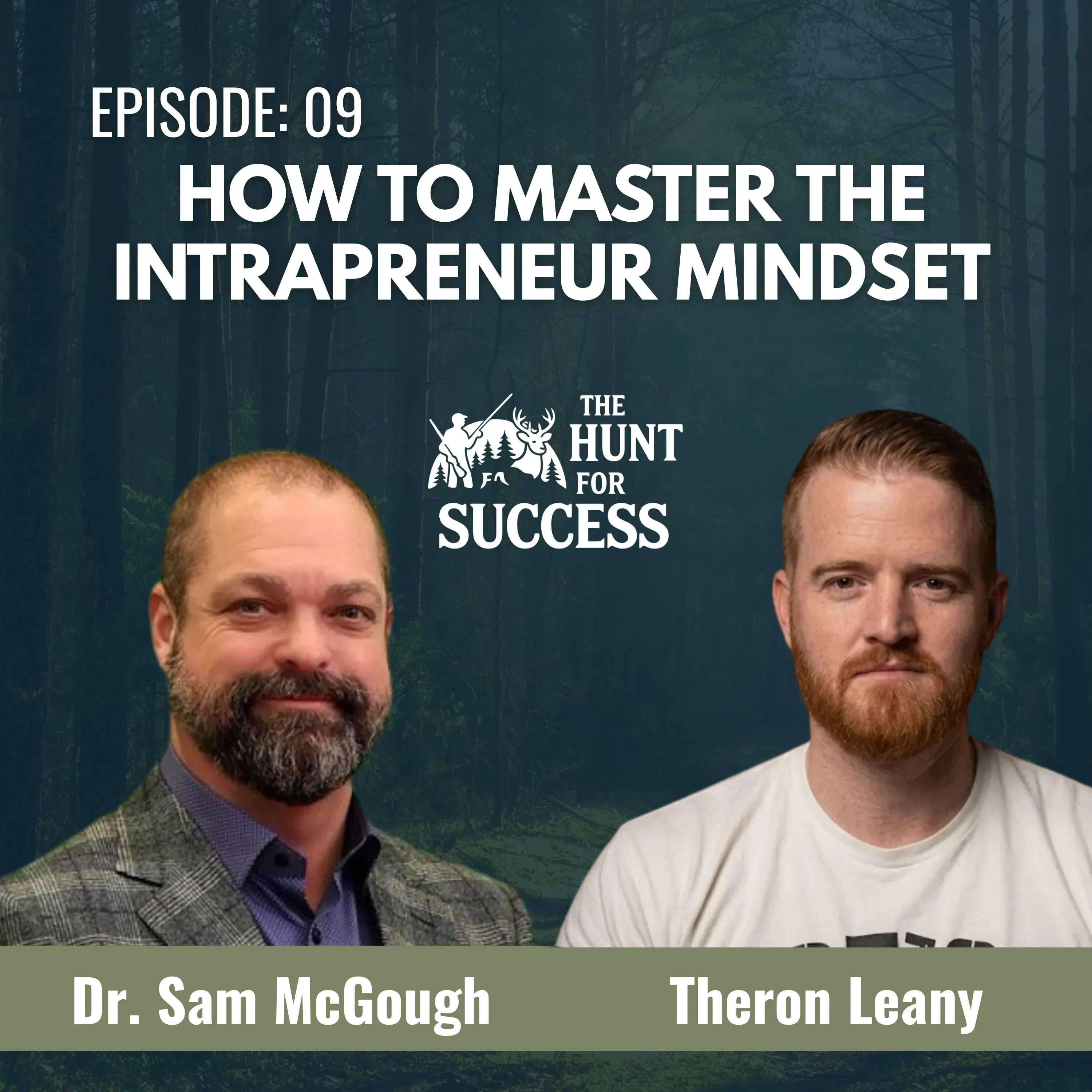
Key takeaways from Theron Leany
The ideas Theron left on the table in episode 09.
-
Take extreme ownership before you own anything.
Theron took a pay cut to $50K to learn the business and spent every ounce of energy improving whatever he touched. He treated it as his own from day one — that's the intrapreneur mindset — and it's exactly why Ben offered him equity. His words: he made himself invaluable to the company.
-
Make your move — it's better to be told no than to never ask.
Ben had secretly set equity aside and was just waiting for Theron to ask. A lot of people say they want something and then never open their mouth; Theron believes Ben would have let him not take it if he'd done nothing. It's better to ask and get told no than to not ask at all.
-
Become invaluable and you'll always have an opportunity.
If you're always working to improve and make yourself invaluable, you'll always have a job or an opportunity — here or somewhere else. If you do the bare minimum to get by, you may keep your job, but you'll never go further.
-
Lost structure is usually a lost 'why.'
Most owners stall because they have no structure — and the lack of structure comes from forgetting why they started. Re-anchor to the original mission (best service, employees hitting six figures) and what you need to do gets really clear. The "why" makes the blueprint obvious.