Episode 11 with Chris Udall. Automatically generated and lightly edited for readability.
SAM McGOUGH · 00:00
My name is Sam McGough with the Hunt for Success podcast. Each week we talk with entrepreneurs and business people who also love hunting and fishing, and figure out what strategies they use to create a life of success. Today I’ve got Chris with us. Chris is a venture capitalist — the first one I ever met, and we did a deal together. Welcome to the show, Chris.
CHRIS UDALL · 00:40
Thanks for having me, Sam.
SAM McGOUGH · 00:52
Can you explain what a venture capitalist does?
CHRIS UDALL · 01:00
The easiest description is Shark Tank. We hear a lot of pitches from different technologies and evaluate them on whether there’s hyperscalability — whether they could sell five or ten years down the road for hundreds of millions to return to our fund and our LPs. Then we support those founders with networking and opening doors. At the end of the day we’re kind of glorified bankers without the same rule set. We take the highest risks, when a bank won’t touch you because you’re too early stage — you might be in your garage. Those are the deals we love, because that’s where we’re going to 10x our investment.
SAM McGOUGH · 02:18
So how did you get into it?
CHRIS UDALL · 02:30
My career started in entrepreneurship in a very roundabout way. My first venture was in the Kingdom of Jordan — we built vocational and entrepreneurial schools for refugees trying to build a life outside the camps, in small towns with high ISIS and Hezbollah recruitment. We worked with young founders to find gaps in the market — not amazing tech ventures, just what would get a family enough to survive and start to thrive. I realized I’d started a business, so I went to business school at Oxford for social entrepreneurship, then Notre Dame, started another venture, took a friend’s startup to an early acquisition in Seattle, then went into growth-strategy consulting. Long story short, there was a LinkedIn easy-apply to manage a venture fund and build an accelerator in Huntsville. I jumped on it, and haven’t looked back.
SAM McGOUGH · 04:52
What are you working on now?
CHRIS UDALL · 05:05
I just launched the Capital Access Fund — $5 million of it is for bringing new venture capitalists to the state and investing in VC funds. We’re trying to create enough capital gravity that founders don’t move to the Bay because someone wrote them a check. They can get the check here. Alabama, to me, is the last great deal in America. We’ve got some of the best skilled labor operating at a lower cost because the cost of living is low. Up in Huntsville we’re near number one in PhDs per capita — one in seven working professionals is an engineer. There’s a lot of shelved technology from the universities and defunded government projects that would be great commercialized. That’s the fun side — plugging those technologies into good entrepreneurs.
SAM McGOUGH · 18:42
You’ve seen companies go from zero to hundreds of millions, and you’ve seen some fail. They all had good ideas. What’s the difference?
CHRIS UDALL · 19:10
I’ve had two failures in my portfolio so far, which is tremendously good — usually we do the math where we invest in 15 and expect 14 to fail. I think the only failure is when you decide to fail. It’s the decision point that you’re no longer going to try to make it work. In both my cases it was life circumstances — not a lack of grit, a lack of prioritizing the effort. There’s always some pivot to make, so it’s the decision to stop pivoting. And realistically it’s burnout. We celebrate entrepreneurship in this country, but we also love to tear our entrepreneurs down — often inside the family — because they challenge everyone else’s comfort. Unless you build a support system of other entrepreneurs, failure happens more often.
SAM McGOUGH · 32:03
When you evaluate a business, what makes a good bet versus a bad one?
CHRIS UDALL · 32:30
I invest pre-seed through Series A — very early, usually pre-revenue, sometimes one or two people. So beyond checking the technology is actually possible within the realms of physics, it’s the person. We evaluate whether this founder can deal with the emotional headwinds and turmoil of these decisions. It takes someone with grit and the willingness to be coachable — if the market tells you your product is garbage, that doesn’t mean you’re done, it means you iterate. We love second-time founders who’ve failed more than they’ve succeeded, because those lessons actually stick. A first-time founder who just got lucky learned less. I can give someone the technology to build an amazing business, but only the right entrepreneurially minded person can actually do it — and that’s a skill you can’t fully teach. Like hunting, at some point you just have to do it.
SAM McGOUGH · 08:27
One of the first things we hit it off on was hunting. You come from a long line of hunters. When did you start?
CHRIS UDALL · 08:45
I do and I don’t — there was one generation that stopped, but I come from a long line of frontiersmen. I’m the third-great-grandson of Jacob Hamblin, who’s in the Cowboy Hall of Fame for over 30,000 miles in the saddle as a diplomat to the First Nation tribes. I started around 16 in Arizona, mostly coyotes and rabbits. Then I moved to Montana to manage a family member’s farm while he had cancer. That’s when I started realizing how important food and agriculture are — and how unhealthy our system can be. My wife and I had built an off-grid tiny house on the farm, and deer kept eating our garden. One day I thought, I’m just going to eat that deer and recoup the loss. So I asked my family member, who was in his 80s, to teach me to hunt. We got in his old ’80s pickup and went up near Glacier. I had to keep a rule book with me because he was teaching me how it worked in the 1940s and ’50s.
SAM McGOUGH · 12:30
And those old techniques still work.
CHRIS UDALL · 12:45
He taught me I don’t need the latest and greatest camo — just wear your flannel, and a piece of equipment from 1960 does the same thing as the thousand-dollar one today, with only a marginal increment. Being a business guy, you understand the diminishing returns. And honestly, deer tastes better than vegetables to me — so it’s a good trade-off.
SAM McGOUGH · 23:43
Tell me about the elk hunt.
CHRIS UDALL · 24:00
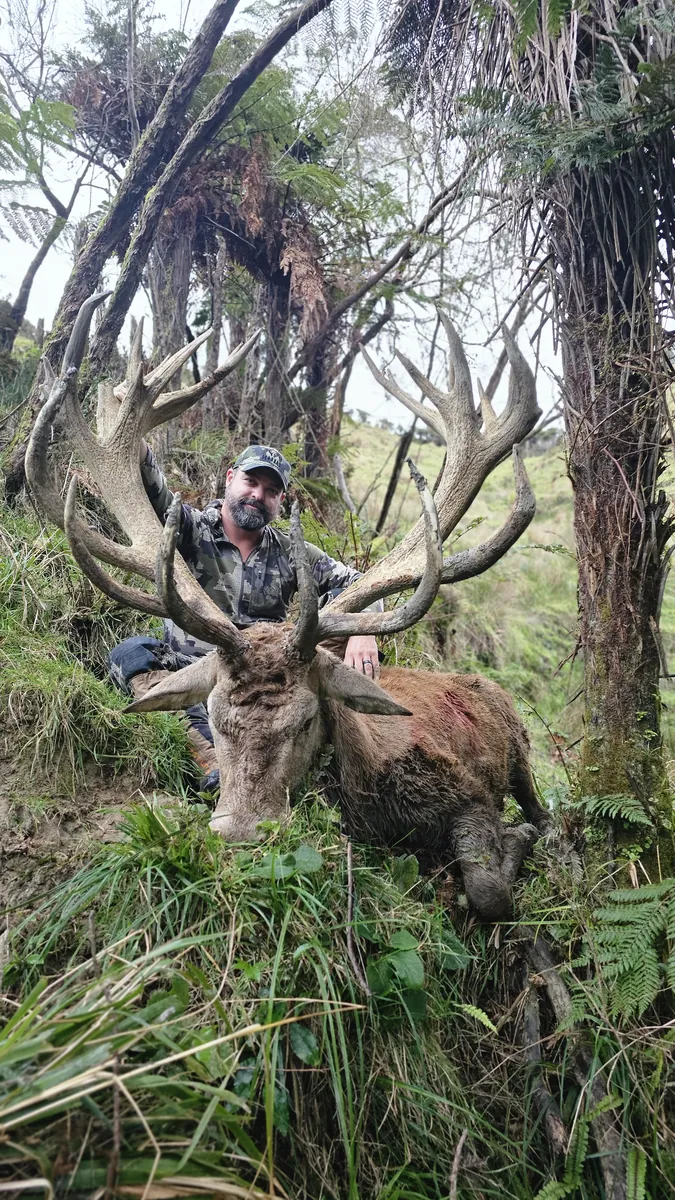
Hunting the Oregon trail was a lifelong dream — I grew up playing Oregon Trail at my grandma’s, and I’d just hunt the whole game. Coming from a frontier family, I prepared to an obsessive degree. It wasn’t enough to have a rifle from an aerospace manufacturer or off-the-shelf ammo — I found a machinist to turn bullets on a lathe to the correct ballistic coefficient, sourced brass with a certain thickness and powder with a certain expansion ratio. I got up in the mountains, had a herd of elk coming, perfect prone position — and right at my window they shifted up the mountain. I had a split second: sprint up the hill for one more shot, or come back tomorrow. I sprinted. But I’d never practiced marksmanship standing, out of breath, heart pounding. My scope looked like an earthquake, and the elk was just shy of 400 yards uphill.
SAM McGOUGH · 27:30
How’d it end?
CHRIS UDALL · 27:45
The story I usually tell is that I shot it clean through the heart — which is true, but only after I’d completely missed four times. The worst part wasn’t the reloading; I had ammo in my pocket and I was staying until I succeeded. It was noticing my buddy watching me from the ridge, and the embarrassment setting in — that I had this nice equipment and wasn’t hitting my mark. That’s what a lot of entrepreneurs feel. If you put enough rounds down range, you’ll probably harvest an animal. But when you stop trying because you feel embarrassed or like you’ve let people down — that’s the thing entrepreneurs really beat themselves up about. That elk fed my family for three years. Every Christmas we’d do an elk Wellington off the backstrap, and the gratitude changes your whole relationship with food.
SAM McGOUGH · 14:05
You’re an entrepreneur yourself, inside a VC firm. What strategies are similar between hunting and business?
CHRIS UDALL · 14:30
You’d think one is primal and the other high-tech, but it’s the same: time management, resource allocation, strategic decisions under stress, and a lot of grit. The biggest thing hunting has done for my career is give me mental oxygen. Everything in business is a problem to solve, and the number one threat is burnout because you can’t shut your brain off. Everyone says go relax on a beach — that’s never worked for me; I can sit on a beach and be equally stressed. Hunting is different because it’s stressful by nature. One wrong step, one broken branch, and months of preparation are gone. But I can’t think of anything except where my next footstep is going. Every sense is focused, and that’s where the decompression comes in.
SAM McGOUGH · 16:20
You told me you took business calls while fishing.
CHRIS UDALL · 16:40
When I ran my first business, our most stressful negotiations were overseas on a different clock, so I took the majority of those calls on a kayak, fly fishing on the lake up the road — dog in the kayak. I can’t tell you how many sheiks or government officials said, “I hear running water in the background.” But running those negotiations with that elevated focus was tremendously helpful.
SAM McGOUGH · 36:28
It’s hard being around W-2 employees when you have that entrepreneur mindset — that willingness to let go of the safety net for something bigger.
CHRIS UDALL · 37:00
It’s the same as talking to someone who’s only ever bought their meat from a store — they don’t have the same relationship to food as someone who’s an active participant. Every time an entrepreneur gets a paycheck, they realize someone else learned to monetize their value more than they did, and then they’ve got a relative off trying to change the world. It makes you look in the mirror in a hard way. I’ve talked to a lot of entrepreneurs, and the ones who walk away didn’t want to settle — they cared more about their dreams than their safety. Sometimes health or burnout just gets you. But you could go bankrupt far less often than you think if you really understand what goes into it.
SAM McGOUGH · 42:57
One benefit of both hunting and business is community.
CHRIS UDALL · 43:20
It’s a unique group of people. The minute someone gives you their secret fishing spot, you’re bonded for life — you can’t learn someone’s spot without going to their barbecues and becoming part of that community. We actually use it to build the ecosystem. One of our pillars at Innovate Alabama is outdoor recreation, so we fund initiatives to get people outside. We had an investor from the Bay Area — a vegan — and we got him a ticket to the governor’s turkey hunt, which we sponsor. He took the state-record turkey this year. And because of that experience, he committed $6 million to investing in Alabama entrepreneurs. We used hunting as the tool to bring him here.
SAM McGOUGH · 50:16
What’s next — any hunts coming up?
CHRIS UDALL · 50:35
I’m planning a hunt with my father — it’d be his first hunt ever. We keep going back and forth between Alaska and going abroad. South Africa has those estate deals — five game animals for around $5,000 — and I’ve looked hard at New Zealand, which is gorgeous; I’m a big Lord of the Rings nerd. In the South Island they’ve got tahr and chamois, big shaggy mountain goats you spot from a helicopter and then stalk. That’s my speed. This would be my dad’s first hunt, so I want to make sure he loves it enough that we can build some traditions for the rest of his retirement.
SAM McGOUGH · 55:40
Chris, I really enjoyed having you on. Thanks, everybody, for tuning in — this is another week of the Hunt for Success, where we teach you how to hunt for success.